Découvrez une analyse comparative approfondie de RAI et XLM pour les paiements transfrontaliers, incluant l’évolution de leurs prix, leurs mécanismes d’émission, leur adoption par les institutions et la structure de leurs écosystèmes techniques. Accédez à des informations clés pour identifier quelle solution stablecoin présente la meilleure valeur d’investissement et prenez connaissance des risques associés. Consultez les cours en temps réel ainsi que des prévisions détaillées pour RAI et XLM sur Gate. Identifiez les stratégies permettant de maximiser votre potentiel d’investissement, tout en intégrant les risques de marché, les enjeux techniques et le cadre réglementaire. Ce guide s’adresse tant aux nouveaux investisseurs qu’aux professionnels souhaitant appréhender pleinement ces solutions de stablecoin.
Introduction : comparatif d’investissement RAI vs XLM
Sur le marché des cryptomonnaies, la comparaison entre RAI et XLM s’impose comme une question centrale pour les investisseurs. Ces deux actifs se distinguent nettement par leur classement en capitalisation, leurs cas d’usage et leur historique de prix, et incarnent des positionnements d’actifs numériques radicalement différents.
RAI (RAI) : Depuis 2021, RAI s’est imposé comme un actif stable non indexé, adossé à l’ETH, reconnu par le marché pour cette singularité.
XLM (XLM) : Lancé en 2014, XLM est reconnu comme une passerelle décentralisée pour les transferts de devises numériques et fiduciaires, et figure parmi les cryptomonnaies les plus échangées et capitalisées au niveau mondial.
Ce dossier propose une analyse complète de la valeur d’investissement entre RAI et XLM, en s’appuyant sur l’évolution des prix, les mécanismes d’émission, l’adoption institutionnelle, l’écosystème technologique et les perspectives d’avenir, afin de répondre à la question cruciale des investisseurs :
"Quel est aujourd’hui le meilleur choix d’investissement ?"
I. Historique des prix et situation actuelle du marché
Historique des cours de RAI et XLM
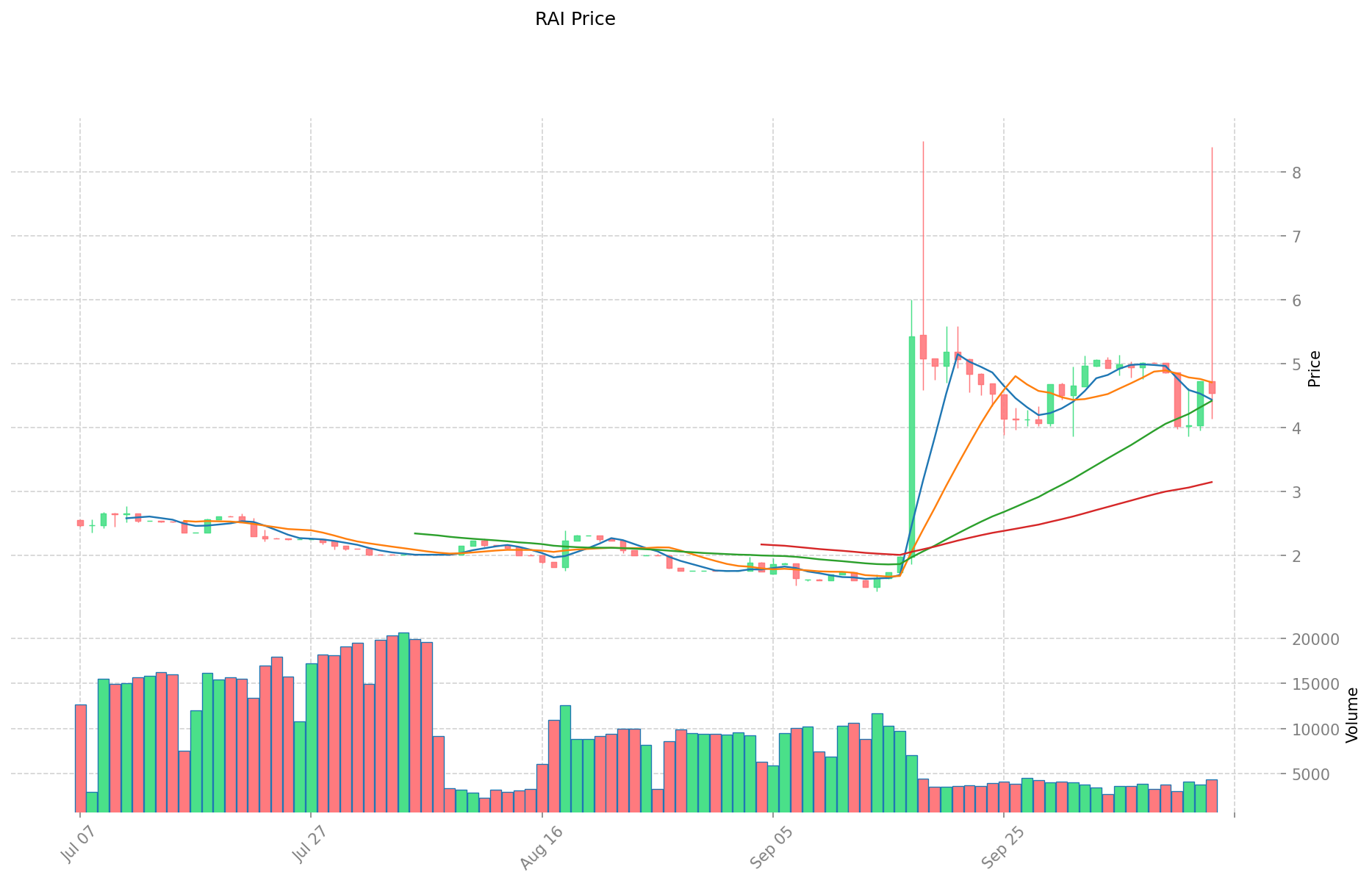
- 2023 : RAI a atteint son point bas historique à 2,44 $ le 8 octobre 2023.
- 2025 : RAI a atteint son record historique à 5,8 $ le 25 août 2025.
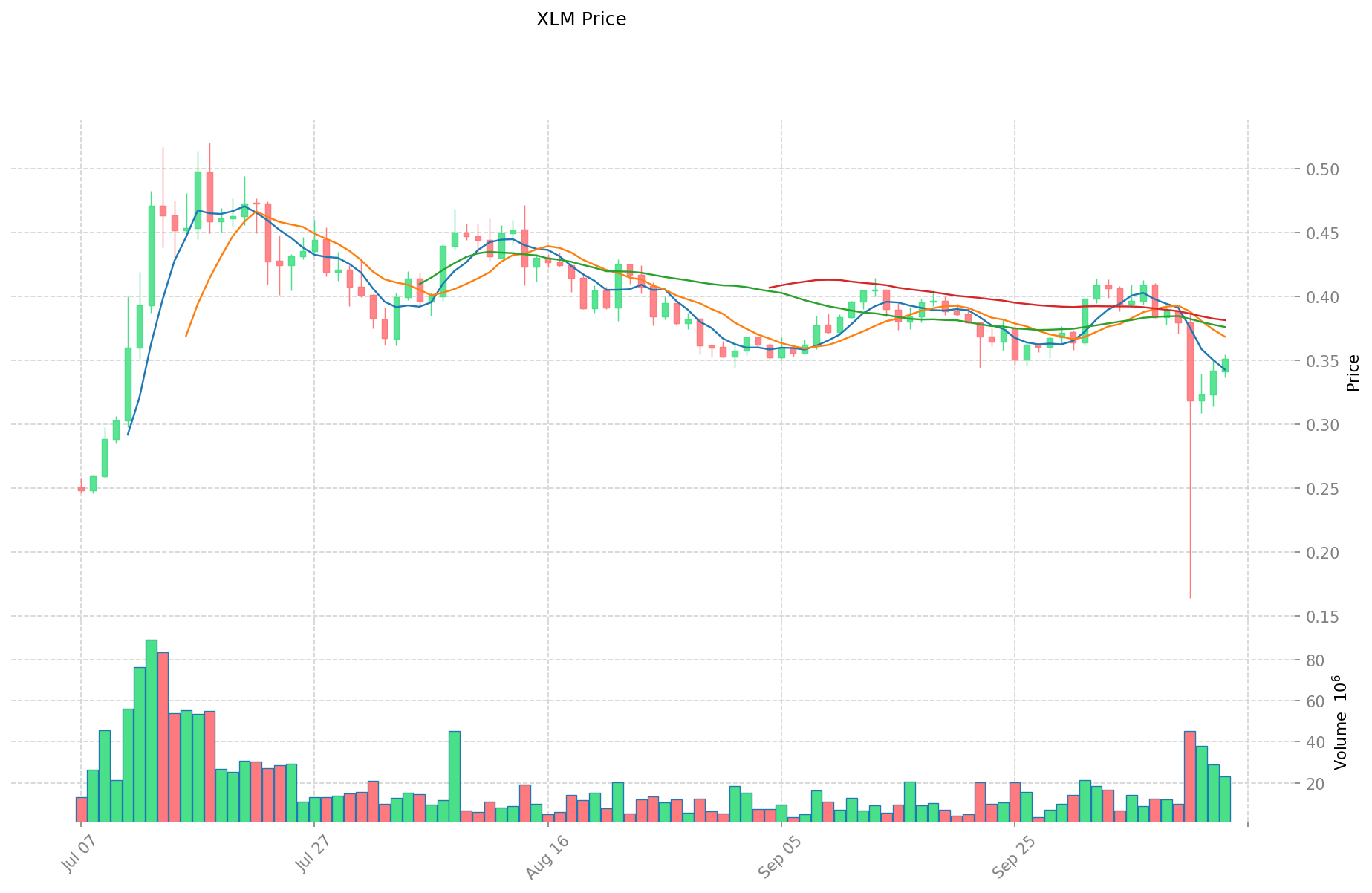
- 2018 : XLM a inscrit son record historique à 0,875 563 $ le 3 janvier 2018.
- 2015 : XLM a touché son plancher record à 0,000 476 12 $ le 5 mars 2015.
- Analyse comparative : Sur les douze derniers mois, RAI a progressé de 50,38 % tandis que XLM a enregistré une envolée de 288,4 %.
Situation du marché au 14 octobre 2025
- Prix actuel RAI : 4,537 $
- Prix actuel XLM : 0,35115 $
- Volume d’échange sur 24 h : RAI 20 764,10203 $ vs XLM 7 892 892,3770812 $
- Indice de sentiment du marché (Peur & Avidité) : 38 (Peur)
Cliquez pour voir les cours en temps réel :
- Consulter le prix actuel du RAI Cours du marché
- Consulter le prix actuel du XLM Cours du marché
II. Facteurs clés déterminant la valeur d’investissement RAI vs XLM
Comparatif des mécanismes d’émission (Tokenomics)
- RAI : Stablecoin algorithmique à indexation réflexive, assurant la stabilité sans ancrage à une monnaie fiduciaire, piloté par des mécanismes autonomes de rétroaction
- XLM : Offre totale limitée à 50 milliards de tokens, sans émission supplémentaire, environ 26 milliards de XLM actuellement en circulation
- 📌 Tendance : Le mécanisme algorithmique du RAI vise à limiter la volatilité, tandis que le modèle à offre fixe du XLM crée une rareté potentielle à mesure que l’adoption progresse.
Adoption institutionnelle et applications sur le marché
- Détention institutionnelle : XLM bénéficie d’un soutien accru via les partenariats de la Stellar Development Foundation avec des établissements financiers et des prestataires de paiement
- Adoption entreprise : XLM occupe une place majeure dans les paiements transfrontaliers via le réseau Stellar ; RAI reste centré sur les applications DeFi
- Environnement réglementaire : XLM tire parti de l’approche réglementaire de Stellar et de partenariats avec des entités régulées, alors que RAI évolue dans un univers DeFi plus expérimental
Développement technique et écosystème
- Évolutions techniques RAI : Amélioration continue des mécanismes de stabilité et intégration aux protocoles DeFi sur Ethereum
- Développements XLM : Priorité à la scalabilité, aux faibles coûts de transaction et à l’interopérabilité grâce au Stellar Consensus Protocol
- Comparatif écosystémique : XLM s’impose dans les paiements et transferts internationaux, tandis que RAI s’intègre profondément aux plateformes de prêt-emprunt DeFi sur Ethereum
Cycles macroéconomiques et de marché
- Résistance à l’inflation : RAI est conçu pour préserver le pouvoir d’achat, indépendamment de l’inflation monétaire, offrant une protection potentiellement supérieure à XLM
- Politique monétaire : Les variations des taux d’intérêt influencent XLM via les flux de paiements transfrontaliers, tandis que la conception algorithmique de RAI vise à réduire cet impact
- Facteurs géopolitiques : XLM bénéficie de la demande croissante en infrastructures de paiement mondiales alternatives, et RAI tire parti de la recherche de stabilité face à l’incertitude financière
III. Prévisions de prix 2025-2030 : RAI vs XLM
Prévision à court terme (2025)
- RAI : Scénario conservateur 3,76 $ - 4,54 $ | Scénario optimiste 4,54 $ - 5,22 $
- XLM : Scénario conservateur 0,32 $ - 0,35 $ | Scénario optimiste 0,35 $ - 0,41 $
Prévision à moyen terme (2027)
- RAI pourrait connaître une phase de croissance, fourchette de prix estimée : 2,88 $ - 6,62 $
- XLM pourrait entrer en phase de croissance, fourchette estimée : 0,37 $ - 0,60 $
- Moteurs : afflux de capitaux institutionnels, ETF, développement de l’écosystème
Prévision à long terme (2030)
- RAI : Scénario de base 4,45 $ - 7,54 $ | Scénario optimiste 7,54 $ - 9,80 $
- XLM : Scénario de base 0,36 $ - 0,58 $ | Scénario optimiste 0,58 $ - 0,81 $
Consultez les prévisions détaillées pour RAI et XLM
Clause de non-responsabilité
RAI :
| Année |
Prix maximum prévisionnel |
Prix moyen prévisionnel |
Prix minimum prévisionnel |
Variation |
| 2025 |
5,2164 |
4,536 |
3,76488 |
0 |
| 2026 |
5,071248 |
4,8762 |
4,047246 |
7 |
| 2027 |
6,61505292 |
4,973724 |
2,88475992 |
9 |
| 2028 |
6,7214906136 |
5,79438846 |
3,186913653 |
27 |
| 2029 |
8,823694746888 |
6,2579395368 |
5,256669210912 |
37 |
| 2030 |
9,8030622843972 |
7,540817141844 |
4,44908211368796 |
66 |
XLM :
| Année |
Prix maximum prévisionnel |
Prix moyen prévisionnel |
Prix minimum prévisionnel |
Variation |
| 2025 |
0,408552 |
0,3522 |
0,31698 |
0 |
| 2026 |
0,42982488 |
0,380376 |
0,28147824 |
8 |
| 2027 |
0,5995486512 |
0,40510044 |
0,3726924048 |
15 |
| 2028 |
0,57767322744 |
0,5023245456 |
0,47720831832 |
42 |
| 2029 |
0,6155987306328 |
0,53999888652 |
0,3671992428336 |
53 |
| 2030 |
0,814696320092724 |
0,5777988085764 |
0,364013249403132 |
64 |
IV. Comparatif des stratégies d’investissement : RAI vs XLM
Stratégie long terme vs court terme
- RAI : Idéal pour les investisseurs en quête de stabilité et de résistance à l’inflation
- XLM : Recommandé pour les investisseurs misant sur les usages de paiement et le potentiel écosystème
Gestion des risques et allocation d’actifs
- Investisseurs prudents : RAI : 60 % vs XLM : 40 %
- Investisseurs dynamiques : RAI : 40 % vs XLM : 60 %
- Outils de couverture : allocation stablecoins, options, portefeuilles multidevises
V. Analyse des risques potentiels
Risque de marché
- RAI : Volatilité pouvant résulter de sa nature algorithmique et des fluctuations du marché DeFi
- XLM : Exposition aux tendances du marché crypto global et aux variations du taux d’adoption
Risque technique
- RAI : Vulnérabilités possibles des smart contracts, défaillances du mécanisme algorithmique de stabilité
- XLM : Risques de congestion réseau, limites potentielles de scalabilité
Risque réglementaire
- Les politiques réglementaires mondiales peuvent impacter différemment les deux actifs ; XLM pourrait faire l’objet d’un examen renforcé en raison de sa vocation aux paiements transfrontaliers
VI. Conclusion : Quel est le meilleur achat ?
📌 Points clés sur la valeur d’investissement :
- RAI : Stabilité non indexée, protection contre l’inflation, intégration DeFi
- XLM : Réseau de paiement transfrontalier établi, partenariats institutionnels, offre plafonnée
✅ Conseils d’investissement :
- Nouveaux investisseurs : Favoriser une répartition équilibrée, avec un léger avantage pour XLM grâce à son écosystème mature
- Investisseurs expérimentés : Explorer l’exposition aux deux, RAI pour la DeFi et XLM pour le potentiel du réseau de paiement
- Institutionnels : Prendre en compte XLM pour sa conformité réglementaire et ses usages de paiement transfrontalier, et RAI pour diversifier l’exposition DeFi du portefeuille
⚠️ Avertissement sur les risques : Le marché des cryptomonnaies est extrêmement volatil. Cet article ne constitue pas un conseil en investissement.
Aucun
VII. FAQ
Q1 : Quelles différences majeures entre RAI et XLM ?
R : RAI est un stablecoin algorithmique visant la stabilité sans ancrage à une monnaie fiduciaire, tandis que XLM cible les paiements et transferts internationaux. RAI est principalement utilisé dans la DeFi, XLM bénéficie d’une adoption large dans les systèmes de paiement.
Q2 : Quelle cryptomonnaie a le mieux performé récemment ?
R : Sur l’an passé, XLM a affiché une croissance plus forte, avec +288,4 % contre +50,38 % pour RAI.
Q3 : En quoi diffèrent les mécanismes d’émission de RAI et XLM ?
R : RAI utilise un mécanisme algorithmique pour la stabilité, XLM dispose d’une offre totale fixe de 50 milliards de tokens sans émission supplémentaire.
Q4 : Quelle cryptomonnaie privilégier pour le long terme ?
R : RAI s’adresse aux investisseurs recherchant la stabilité et la résistance à l’inflation ; XLM convient à ceux qui misent sur les usages de paiement et le potentiel écosystémique.
Q5 : Quels sont les principaux risques liés à l’investissement dans RAI et XLM ?
R : RAI présente des risques de vulnérabilité des smart contracts et d’instabilité du marché DeFi ; XLM reste soumis aux tendances du marché crypto mondial et à une vigilance réglementaire accrue pour les paiements transfrontaliers.
Q6 : Quelle adoption institutionnelle pour RAI et XLM ?
R : XLM bénéficie d’un fort appui institutionnel via les partenariats de la Stellar Development Foundation avec les institutions financières et prestataires de paiement, alors que RAI reste concentré sur la DeFi.
Q7 : Quelles sont les prévisions à long terme pour RAI et XLM d’ici 2030 ?
R : À l’horizon 2030, RAI est attendu entre 4,45 $ et 7,54 $ en scénario de base, 7,54 $ à 9,80 $ en scénario optimiste. XLM entre 0,36 $ et 0,58 $ en scénario de base, 0,58 $ à 0,81 $ en scénario optimiste.
* Les informations ne sont pas destinées à être et ne constituent pas des conseils financiers ou toute autre recommandation de toute sorte offerte ou approuvée par Gate.