In the 2026 industry landscape, competition among new energy vehicles has evolved from single-vehicle performance to ecosystem-level rivalry. Differences between individual vehicles are narrowing, while charging convenience, software capabilities, data services, and enterprise-grade operational strength are emerging as new competitive focal points. This shift is driving automakers to transform from pure manufacturers into ecosystem operators.
From a technology and industry development perspective, the core of the electric vehicle ecosystem is the integration of energy networks and software systems. Vehicles are no longer just modes of transportation—they function as energy nodes and data terminals. Charging networks facilitate energy flows, software systems manage data flows, and fleet management and subscription services create business flows. Rivian is strategically expanding its long-term boundaries within this structure.
What Is the Rivian Adventure Network
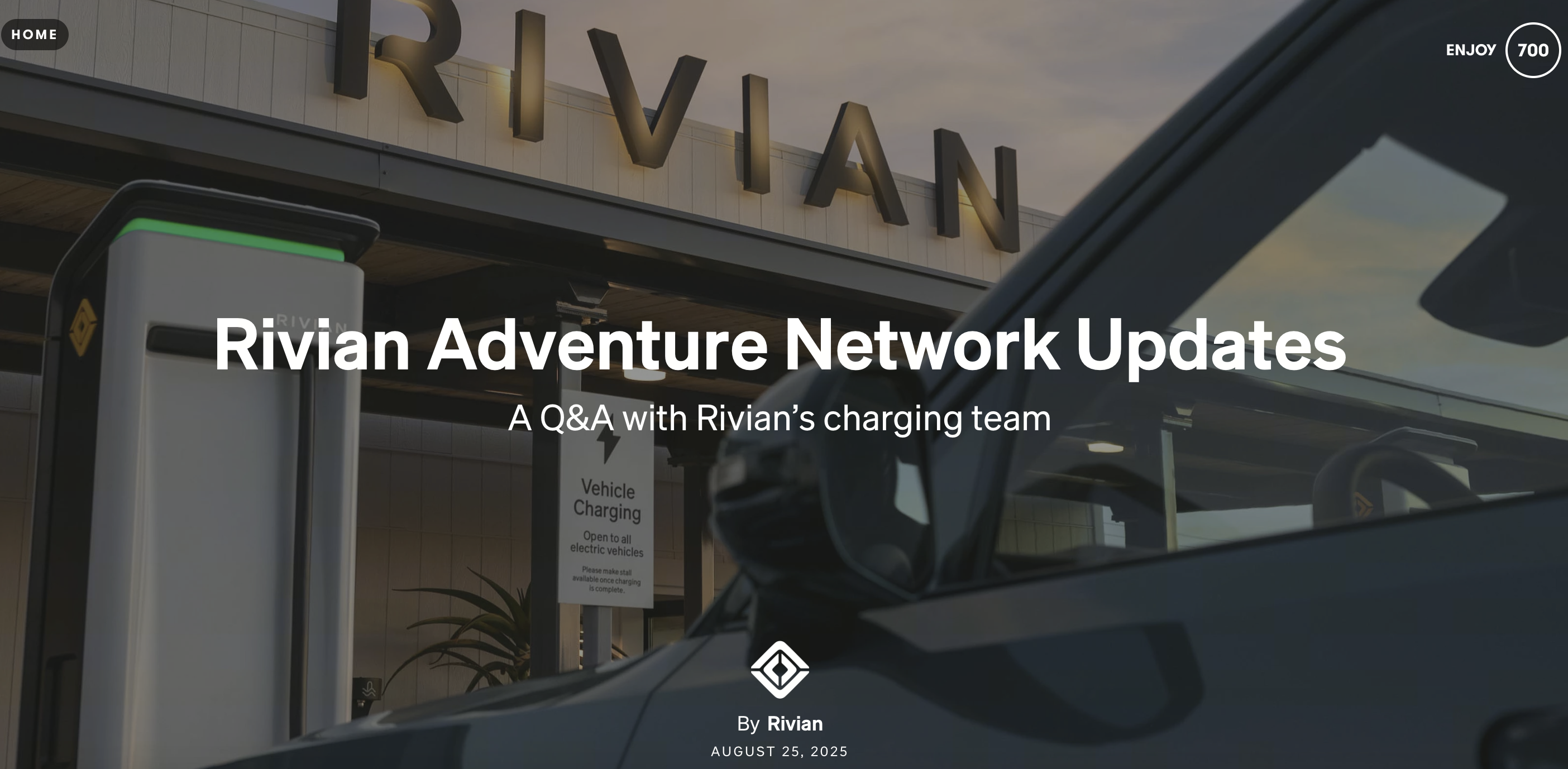
The Rivian Adventure Network is Rivian’s proprietary high-power DC fast-charging network, designed primarily for R1 series electric pickups and SUVs, with a focus on long-distance travel and outdoor energy replenishment. Unlike conventional charging networks, Rivian’s network doesn’t simply pursue coverage density; instead, it strategically targets “adventure travel scenarios” such as national parks, major highways, and remote tourist routes. This approach aligns closely with Rivian’s product positioning, serving users who prioritize outdoor and long-distance driving.
Technically, the Adventure Network employs high-power fast-charging technology to minimize charging time, while working in tandem with the vehicle’s energy management system to optimize charging efficiency. This integration enables vehicles to intelligently plan charging stops based on route, battery level, and environmental factors, enhancing the overall travel experience.
From a business perspective, the charging network is more than just infrastructure—it’s a primary user entry and data access point. Once users join the ecosystem, charging activity generates ongoing data streams that form the foundation for subsequent software services and energy management.
Rivian’s Commercial Electric Vehicle Strategy
Rivian’s flagship product in the commercial EV segment is the Electric Delivery Van (EDV), targeting logistics and last-mile delivery markets.
This business line is closely integrated with Amazon, supplying a large-scale electric delivery fleet that provided Rivian with stable early-stage orders and optimized production capacity. This B2B model is a strong complement to its consumer vehicle business.
Commercial electric vehicles offer key advantages: high usage frequency and consistent operational data. Unlike individual consumers, commercial vehicles operate for extended hours on fixed routes, making it easier to generate quantifiable data loops. These datasets are crucial for ongoing software optimization and energy management.
Additionally, the commercial vehicle business drives scale efficiencies on the production side. Standardized models reduce supply chain costs and boost manufacturing efficiency—critical for improving overall gross margins.
How FleetOS Empowers Enterprise Fleet Management
FleetOS is Rivian’s fleet management platform for enterprise clients, designed to transform EVs into “manageable digital assets.” The system delivers real-time vehicle monitoring, route optimization, energy consumption analytics, predictive maintenance, and dispatch management, all within a single platform for comprehensive fleet oversight.
For example, enterprises can use FleetOS to track each vehicle’s energy usage, driving efficiency, and predictive maintenance needs, reducing operational costs and minimizing downtime.
Architecturally, FleetOS is an extension of the SDV (Software-Defined Vehicle) concept into commercial use cases. Vehicles become operational data nodes, continuously generating information that feeds back into software system optimization.
Over time, FleetOS could evolve into a subscription-based service, providing Rivian with steady software revenue streams beyond vehicle sales.
Why Rivian Invests in Charging Infrastructure
Charging infrastructure is a foundational pillar of the electric vehicle ecosystem, vital not only for energy replenishment but also for ecosystem control.
Rivian’s charging network serves three core objectives: enhancing user experience, reinforcing a closed-loop brand ecosystem, and securing control over energy access.
- From a user experience standpoint, charging convenience directly impacts EV adoption, especially for long-distance and outdoor travel.
- From an ecosystem perspective, owning the charging network reduces reliance on third-party infrastructure, increasing system reliability and service consistency.
- From a business perspective, integrating the charging network with software systems enables dynamic scheduling, energy optimization, and data collection—laying the groundwork for future energy management and subscription services.
How Software Subscriptions Drive New Revenue
As the SDV architecture matures, software subscriptions are emerging as a key revenue stream for Rivian. Software now extends beyond basic controls to include advanced driver assistance, energy optimization tools, fleet management features, and entertainment system upgrades.
Users can select service packages based on their needs, such as enhanced driver assistance or enterprise-grade FleetOS, establishing an ongoing payment model.
This approach shifts the automotive business from “one-time product sales” to “continuous service platforms,” expanding lifetime value.
The Strategic Value of Rivian’s Partnerships with Amazon and Volkswagen
Rivian’s collaboration with Amazon centers on commercial EVs, providing stable, large-scale orders that helped establish production scale and cash flow early on. Meanwhile, its technology partnership with Volkswagen Group focuses on software and electronic/electrical architecture—platform sharing and software integration—that supports Rivian’s long-term tech growth.
These partnerships strengthen Rivian’s ecosystem from both the demand (market) and supply (technology) sides, enhancing its overall industry resilience.
Challenges in Building the EV Ecosystem
Despite the long-term value of the EV ecosystem, there are significant challenges in execution. Infrastructure buildout is expensive, and expanding charging networks requires sustained capital investment. Regional standardization remains fragmented, making cross-region charging and data integration difficult. Software system complexity is rising, spanning vehicle control, cloud computing, and data security—demanding advanced engineering capabilities. In commercial vehicles, balancing scale expansion with profitability is an ongoing challenge.
The Future of Rivian’s Ecosystem
Rivian’s ecosystem strategy will focus on three core directions:
- Further expansion of charging and energy networks, enhancing energy dispatch and coverage.
- Deepening software services, increasing long-term revenue through subscription models.
- Integrating commercial vehicles and FleetOS to deliver enterprise-grade EV operation solutions.
Over the long term, Rivian aims to build a fully integrated ecosystem—vehicles, energy, software, and data—evolving from an automaker into a comprehensive smart mobility and energy platform.
Summary
Rivian is building a complete electric vehicle ecosystem through its charging network, commercial EVs, and software platforms. The core strategy is transforming the car from a standalone product into an integrated platform connecting energy, data, and services. As the EV industry shifts into ecosystem competition, this multilayered, collaborative model is becoming the key to long-term competitiveness.