Unlike traditional brokerage models, Gate integrates Korean stock trading into a single unified account system. This allows users to directly participate in the Korean stock market using USDT, without the need to open a separate Korean securities account.
What Users Need to Prepare Before Trading Shinhan Financial Group Stock on Gate
Before trading Shinhan Financial Group Stock, users must meet both account authorization and funding requirements.
Gate's Korean stock trading relies on the unified account system, meaning users need to prepare not just funds but also confirm market access permissions.
Basic Requirements
- A functional Gate account
- Completed identity verification (if applicable)
- USDT held in the account
- Korean stock trading module activated
- Confirmation that Shinhan Financial Group stock is available for trading
Key Points to Understand
Shinhan Financial Group stock is a Korean banking stock, and its trading permissions may vary depending on regional policies and account types.
Step 1: How to Deposit USDT
USDT is the core settlement asset for Gate Korean stock trading. The deposit process directly affects subsequent trading efficiency.
Users can obtain USDT through on-chain deposits or internal platform transfers, and then move the funds into the stock trading account module.
Key Logic of the Deposit Process
Depositing USDT is not just about "funds arriving." It involves three critical states:
- On-chain confirmation completed
- Credited to the platform account
- Available balance generated in the stock account
USDT Deposit Considerations
| Item |
Risk Level |
Description |
| Network Selection |
High |
Must match the chain type |
| Address Accuracy |
High |
Wrong address is irreversible |
| Deposit Delay |
Medium |
Affected by blockchain congestion |
| Available Status |
Medium |
Must be transferred to stock account |
Step 2: How to Find Shinhan Financial Group Stock
In the Gate Korean stock market, users can locate Shinhan Financial Group stock via the search system. Users can enter either the Chinese name or the English name "Shinhan Financial Group" to match.
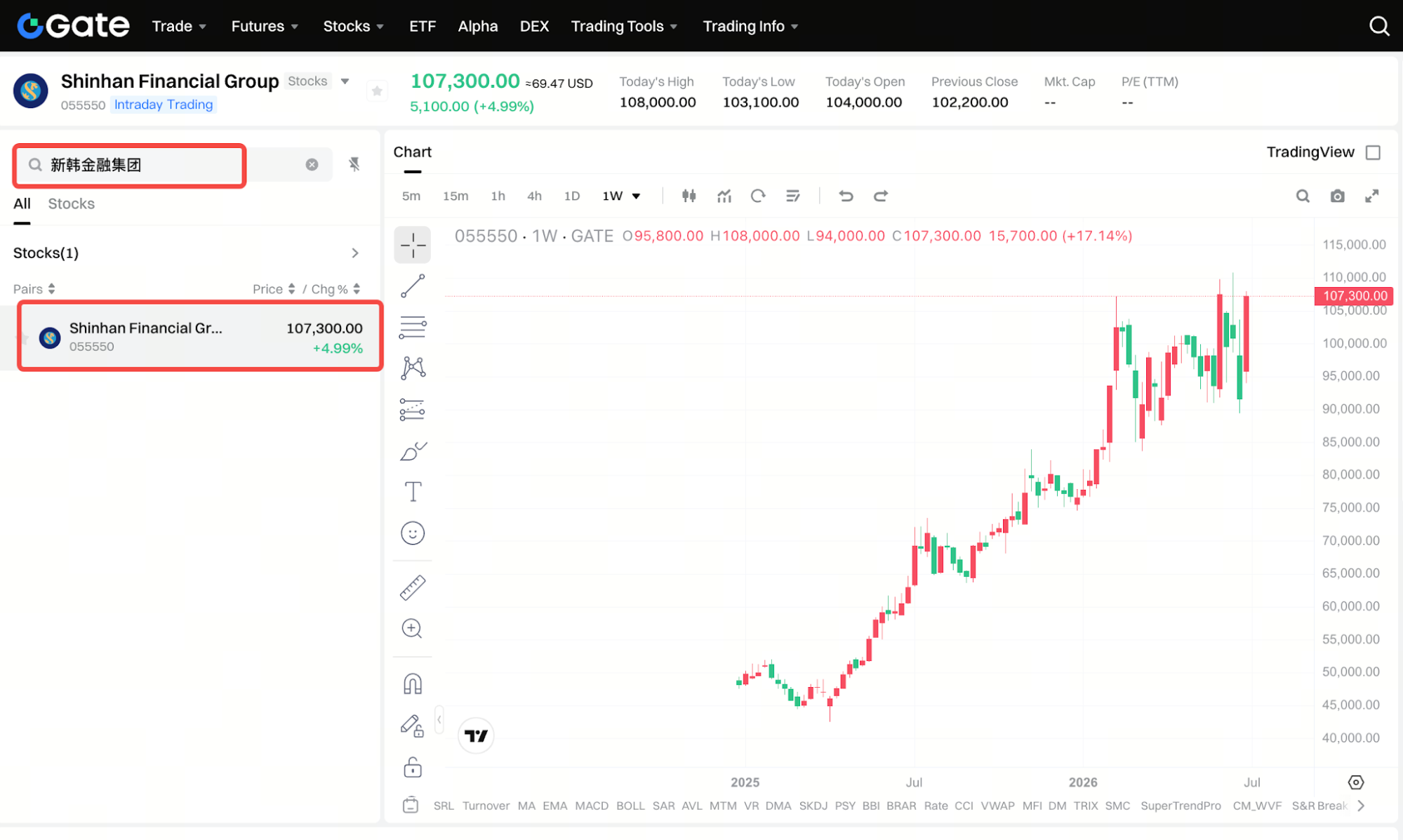
Key Identification Points
Before entering a trade, users need to confirm the following:
- That it is indeed Shinhan Financial Group
- That it is currently in a tradable state
Step 3: How to Complete a Stock Trade
Once on the Shinhan Financial Group stock page, users can execute buy or sell operations.
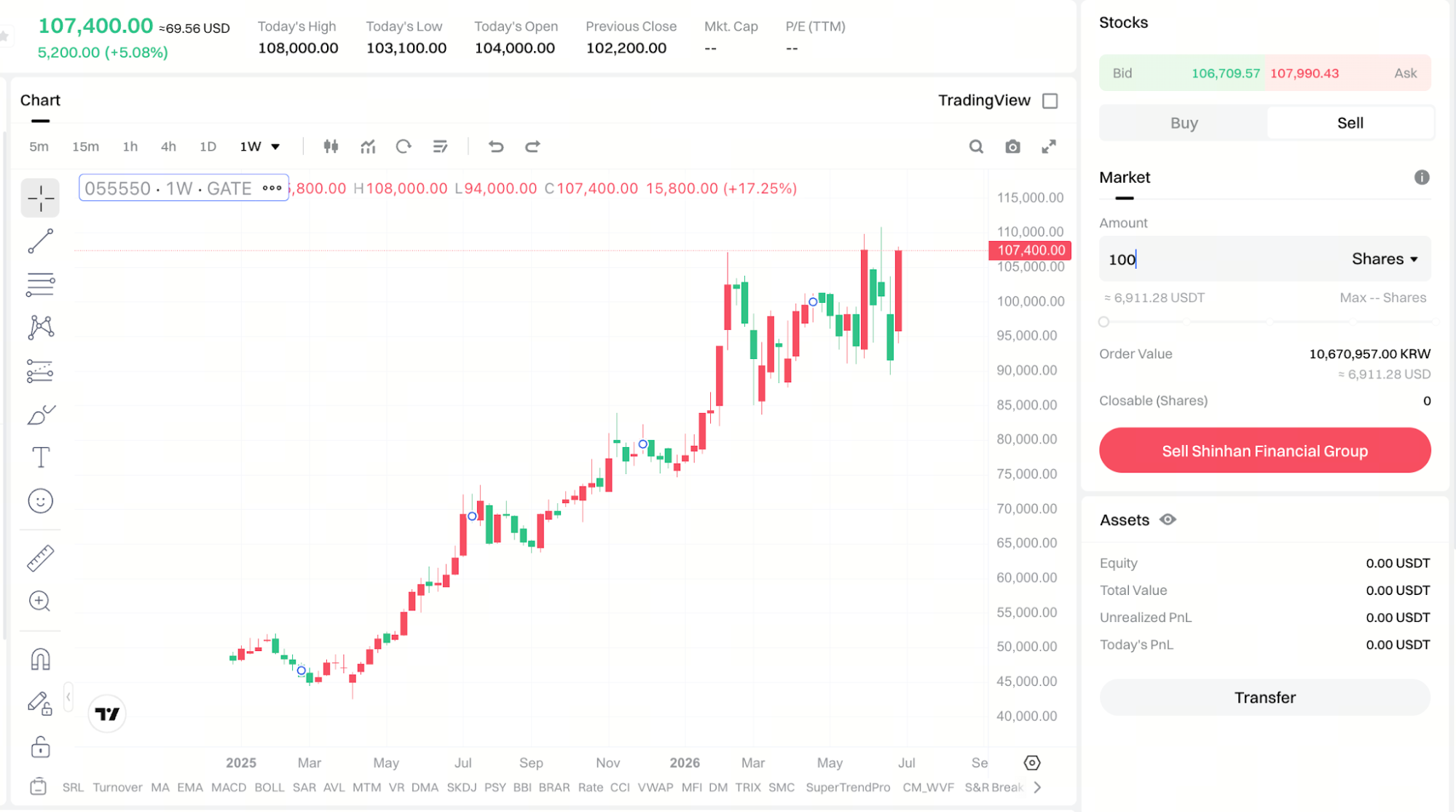
Key Points of the Order Process
- Confirm the correct stock target
- Enter the trading amount or quantity
- Preview the execution cost
- Submit the order
Execution Logic Explanation
Whether an order is filled depends on:
- Market liquidity
- Current order book depth
- Selected order type
- Trading session status
Fee Structure for Shinhan Financial Group Stock Trading
Trading fees consist of transaction fees and implicit execution costs.
Fees are not fixed; they are dynamically adjusted based on market rules and platform policies.
Fee Components
| Type |
Description |
Impact |
| Trading Fee |
Percentage of trade value |
Direct cost |
| Spread |
Bid-ask difference |
Implicit cost |
| Execution Slippage |
Actual execution deviation |
Market volatility |
| Other Fees |
Regulatory fees |
Depends on the platform |
The fee structure ultimately affects the user's "final holding cost," not just the cost of a single trade.
Risks to Understand Before Buying Shinhan Financial Group Stock
Shinhan Financial Group stock is a banking financial asset, and its price is highly correlated with the macroeconomy.
Core Risk Sources
- Interest rate changes affecting bank net interest margins
- Fluctuations in the Korean economic cycle
- Changes in financial regulatory policies
- Shifts in banking industry competition
- Correlations with global market risks
Structural Characteristics
Bank stocks typically exhibit:
- Clear cyclicality
- Relatively high dividend stability
- High sensitivity to macroeconomic factors
Key Features of Trading Shinhan Financial Group Stock on Gate
Gate's Korean stock trading mechanism is essentially a "unified account + multi-market asset access" model.
Its features include:
- USDT as the unified settlement asset
- Stocks and digital assets managed under one account
- A single entry point for cross-market assets
- A standardized trading interface
This structure enables users to manage global asset allocation within one platform, without needing to navigate multiple brokerage systems.
Summary
The process of trading Shinhan Financial Group stock with USDT on Gate can be broken down into four core steps: funding preparation, target search, order execution, and fee confirmation.
As a representative Korean banking stock, Shinhan Financial Group's trading logic is similar to that of traditional brokerages. However, through USDT settlement and a platform-based entry point, it delivers higher access efficiency and unified management capabilities.
FAQ
How can users trade Shinhan Financial Group stock on Gate?
Users can search for Shinhan Financial Group stock in the Korean stock section and use USDT to complete the trade.
What conditions are required to trade Shinhan Financial Group stock?
A Gate account, USDT balance, and Korean stock trading permissions are required.
What order types are supported for Shinhan Financial Group stock?
Market orders and limit orders are supported. Please refer to the real-time page for specifics.
What determines the price of Shinhan Financial Group stock?
The price is primarily determined by supply and demand in the Korean stock market and macroeconomic factors.
Is trading on Gate simpler than using a traditional broker?
Gate offers a unified account and USDT settlement system, making the trading process more streamlined, but it still requires adherence to market rules.