As global tourism spending continues to evolve, cruise ships have shifted from traditional transport to comprehensive vacation platforms that combine hospitality, dining, entertainment, shopping, and destination exploration. Major cruise lines now profit not just from ticket sales, but also by enhancing user value through onboard spending, specialty services, and destination experiences—making them vital players in the travel industry value chain.

From a business standpoint, Carnival’s competitive edge comes not only from its vast fleet, but also from its brand portfolio, global route network, digital management capabilities, and continually optimized business model. Understanding Carnival’s growth path offers investors and consumers deeper insight into global cruise industry trends and the business logic behind CCL stock.
What Is Carnival Corporation (CCL)? Background and Development
Founded in 1972 and headquartered in Miami, Carnival Corporation (CCL) is one of the world’s largest cruise operators. Through its multiple brands, the company covers major cruise markets around the globe, including the Caribbean, Europe, Alaska, Asia, and Australia.
Carnival’s evolution mirrors the democratization of the modern cruise industry.
Early cruise vacations catered primarily to high-income travelers, with high prices and limited market reach. Carnival shifted this paradigm by launching more accessible cruise products, transforming cruises from “niche luxury trips” into mainstream travel for families, young consumers, and the broader vacation market.
As the company expanded, Carnival acquired and integrated multiple international cruise brands, building a global multi-brand system targeting different market segments. Today, Carnival operates several renowned cruise brands:
- Carnival Cruise Line
- Princess Cruises
- Cunard
- Holland America Line
- Costa Cruises
This multi-brand strategy enables Carnival to serve a diverse customer base and reduce the impact of volatility in any single market.
In recent years, as global tourism demand has rebounded post-pandemic, the cruise sector has entered a recovery cycle. Carnival continues to optimize its fleet, increase the share of high-margin businesses, and improve profitability through cost controls. The latest financials show robust booking demand and growing consumer interest in cruise vacations, driving steady improvement in the company’s operating metrics.
Carnival’s Core Business Segments
Carnival’s business centers on a “cruise vacation ecosystem,” extending far beyond simple maritime transport.
Cruise Operations
Cruise operations are Carnival’s main revenue driver. The company uses large ships to carry guests along fixed routes, providing lodging, dining, entertainment, and travel experiences. Modern cruise ships can accommodate thousands of guests and offer amenities such as:
- Restaurants and bars
- Theaters and performance venues
- Pools and water attractions
- Shopping areas
- Fitness and wellness centers
Unlike traditional hotels, cruise ships’ mobility lets guests visit multiple destinations in one trip while enjoying consistent accommodations.
Onboard Spending
Beyond ticket sales, onboard spending is a major profit engine for cruise operators.
Key categories include:
- Fine dining
- Beverage services
- Entertainment activities
- Internet access
- SPA services
- Retail shopping
As travelers seek more personalized experiences, cruise lines continually expand value-added services, boosting average revenue per guest.
Destination Tourism
When cruise ships dock, they drive local tourism spending. Some cruise lines also develop exclusive destination projects, controlling the guest experience and increasing revenue. Carnival is investing in destination experiences so guests value the entire journey—not just onboard activities.
How the Cruise Industry Operates
The cruise industry is a highly complex tourism ecosystem. Operationally, cruise companies must coordinate across several dimensions:
Fleet Development
Building a large cruise ship typically costs hundreds of millions of dollars and requires long-term planning.
Key considerations include:
- Vessel capacity
- Energy efficiency
- Entertainment facility design
- Cabin configuration
Route Planning
Cruise lines adjust itineraries based on season, weather, and market demand. For example, the Caribbean is popular in winter, the Mediterranean in summer, and Alaska has distinct seasonal appeal.
Customer Engagement
Cruise operators use marketing, loyalty programs, and digital tools to drive repeat business. With high average ticket prices, guest experience and brand trust are critical.
Supply Chain Management
A large cruise ship consumes vast quantities of food, fuel, and supplies daily. Scalable operations are a core advantage for major cruise operators.
How Carnival Builds a Global Brand Portfolio
Carnival’s unique strength lies in using differentiated brands to reach diverse consumer segments.
- Carnival Cruise Line targets the mass market, emphasizing entertainment, family travel, and high value.
- Princess Cruises serves the upper-mid market, focusing on destination exploration, cultural experiences, and premium service.
- Cunard represents classic luxury, known for tradition, elegance, and high-end guest experiences.
- Holland America Line appeals to mature travelers, emphasizing cultural journeys and longer itineraries.
- Costa Cruises primarily serves the European market, integrating local cultural elements.
This brand matrix is similar to the multi-brand approach of major hotel groups. Carnival shares procurement, technology, and management systems across brands while maintaining distinct market positioning.
The multi-brand strategy expands Carnival’s reach and enhances its resilience to market risks.
Digital technology is reshaping the cruise industry. Carnival leverages digital platforms to enhance guest experiences, including:
- Online reservations
- Mobile app management
- Personalized recommendations
- Smart customer service
Data analytics help Carnival understand guest preferences and deliver targeted recommendations.
AI will further enable:
- Route optimization
- Ship operations management
- Demand forecasting
- Energy management
Sustainability is also a strategic focus.
Cruise operators are investing in:
- LNG-powered clean-energy ships
- Energy-saving technologies
- Waste management systems
- Carbon emissions controls
With tightening environmental regulations, sustainability will be a key driver of long-term competitiveness in the cruise sector.
Carnival vs. Royal Caribbean and Norwegian Cruise Line
The global cruise market is led by three giants: Carnival, Royal Caribbean, and Norwegian Cruise Line.
Carnival’s edge lies in scale and brand breadth.
Royal Caribbean focuses on innovative, mega-ship experiences with advanced technology and family entertainment.
Norwegian Cruise Line stands out for its flexible vacation style, including casual dining and leisure options.
Competition has shifted from fleet expansion to:
- Enhancing guest experience
- Growing high-margin services
- Boosting operational efficiency
- Accelerating digital transformation
Carnival is known for its broad reach, Royal Caribbean for innovation, and Norwegian for differentiated service.
How to Invest in Carnival Corporation (CCL) via Gate Stock Trading
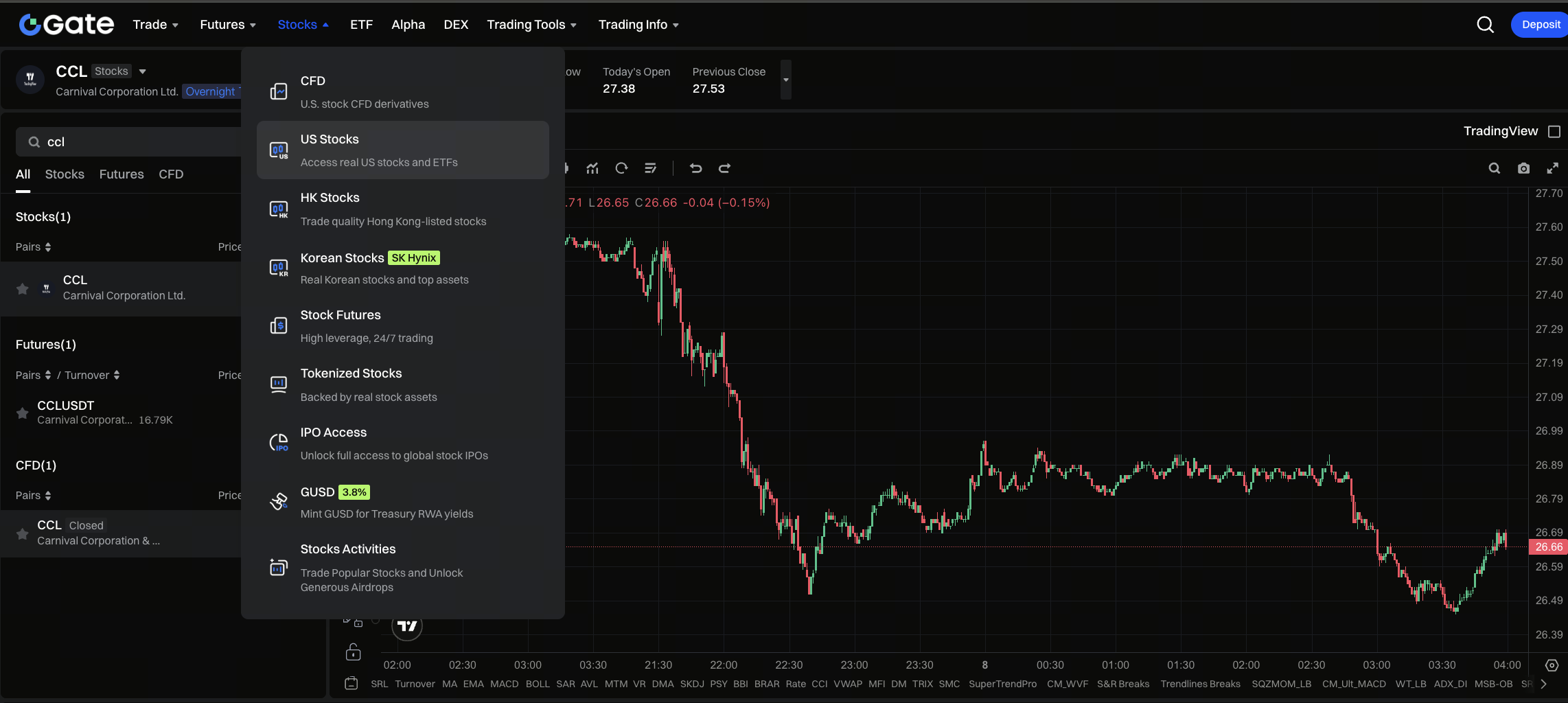
Carnival Corporation (CCL) is a major publicly traded cruise operator on U.S. capital markets. For investors tracking the recovery in tourism, the experience economy, and global services, CCL is a key indicator of the cruise industry cycle.
You can invest in global equities—including CCL—through Gate Stock Trading. Gate Stock supports US, Hong Kong, and Korean markets, offering trading in stocks, ETFs, and more, making it easy to access global capital market opportunities.
Compared to traditional overseas brokerage accounts, Gate Stock offers a more flexible experience, including USDT settlement and fractional share trading, lowering the barrier for global stock investing. Investors can allocate capital to US stocks like CCL based on their portfolio size and monitor key factors such as revenue growth, cruise demand, fuel costs, and competitive dynamics.
Keep in mind that CCL’s share price is influenced by the travel cycle, macroeconomic conditions, interest rates, and company operations. Investors should consider industry trends and company fundamentals before trading.
Risks to Consider When Investing in CCL Stock
Carnival Corporation trades on U.S. markets under the ticker CCL. For investors focused on travel and leisure, CCL represents opportunities in the cruise recovery and the experience economy.
You can also access global stock markets—including CCL—via Gate Stock Trading, which covers US, Hong Kong, and Korean markets and offers stocks, ETFs, and more for convenient global asset allocation.
However, investing in CCL stock comes with several risks:
Consumer Cycle Risk
Cruises are discretionary spending. In weak economies, consumers may cut back on high-value travel.
Fuel Cost Risk
Cruise operations are energy-intensive; rising fuel prices can pressure profits.
Debt Burden
The industry requires heavy capital investment. New ships demand substantial funding, so financial health must be closely watched.
Environmental Regulation
Stricter emissions requirements could raise operating costs.
Investors should weigh both industry cycles and company financials when assessing CCL’s growth prospects.
Carnival’s Future and Long-Term Growth Potential
Carnival’s growth strategy focuses on several key areas:
Enhancing Guest Value
The company aims to expand high-margin services and boost per-guest revenue.
Optimizing Fleet Efficiency
Next-generation ships offer lower costs and richer experiences, supporting long-term profitability.
Expanding Global Markets
Emerging regions like Asia offer significant growth potential.
Driving Smart Operations
AI and data will help cruise lines boost efficiency and deliver more personalized service.
Long-term, global travel demand is expected to rise. As consumers prioritize experiences, the cruise industry remains poised for growth.
Summary
Carnival Corporation (CCL) is a leading force in the global cruise industry, building a competitive system that spans mass to luxury markets through its multi-brand strategy, global fleet, and integrated tourism ecosystem.
The company’s value lies in operating a vast fleet and leveraging brands, data, technology, and services to enhance guest experience and business efficiency.
Looking ahead, the cruise industry will benefit from rising travel demand, digital transformation, and sustainability initiatives. However, energy costs, macroeconomic shifts, and competition will continue to impact performance.
For investors, CCL represents both the opportunity of a global tourism rebound and the need to manage industry and company-specific risks.
FAQs
What is Carnival Corporation (CCL)?
Carnival Corporation (CCL) is a leading global cruise operator with multiple international brands, offering cruise travel services worldwide.
What sector does CCL stock belong to?
CCL is part of the travel and leisure sector, focusing on cruises, leisure travel, and hospitality entertainment.
Who are Carnival’s main competitors?
Key competitors include Royal Caribbean Group and Norwegian Cruise Line Holdings.
How does Carnival generate revenue?
Main revenue streams include cruise ticket sales, onboard spending, entertainment services, and destination tourism projects.
Does the cruise industry have future growth potential?
With rising global tourism spending and the growth of the experience economy, the cruise industry has strong long-term prospects, though companies must address cost, environmental, and economic cycle challenges.