atomic swap

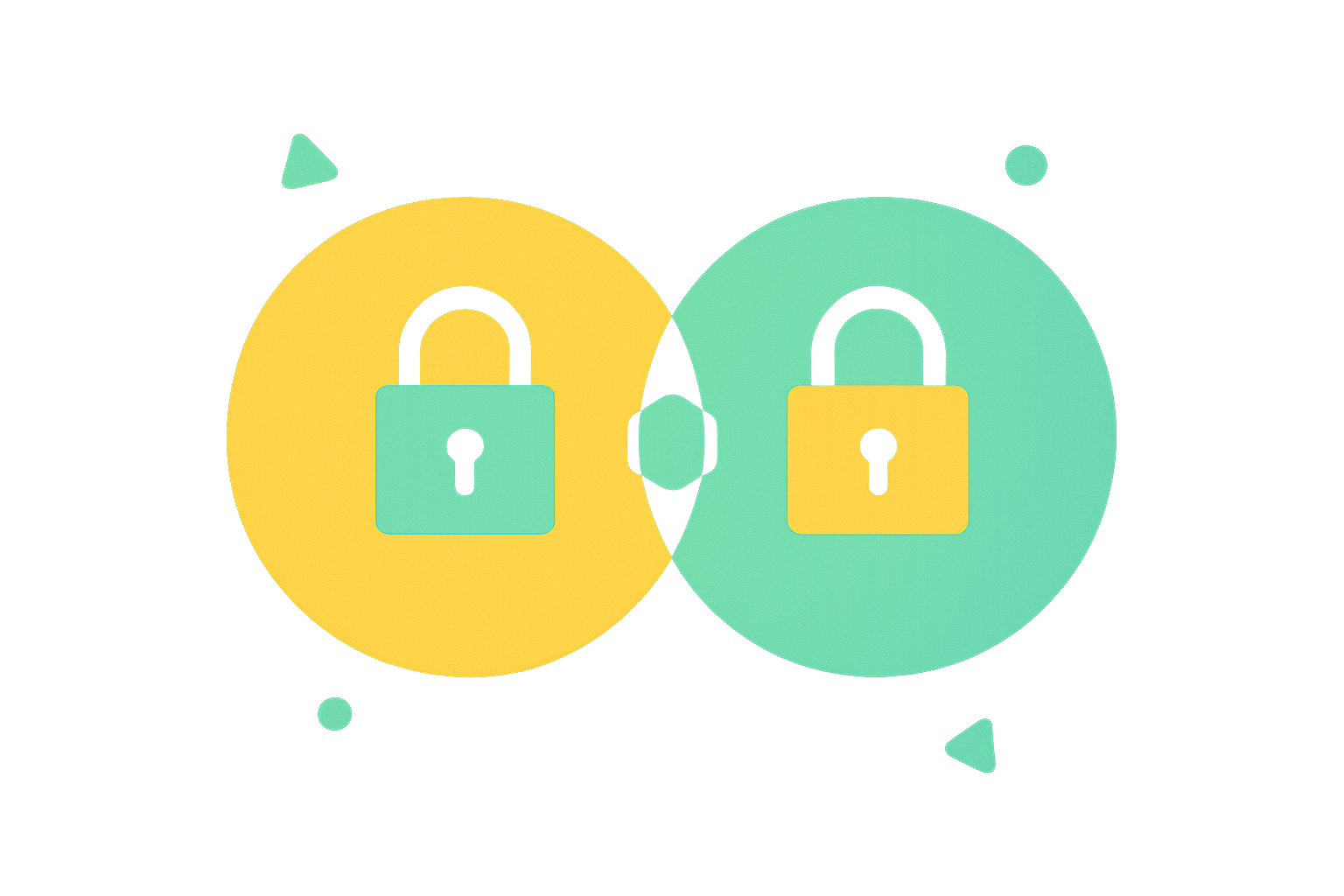
Atomic swap is a decentralized cross-chain trading technology that allows users on different blockchain networks to directly exchange cryptocurrencies without relying on centralized exchanges or third-party intermediaries. Based on Hash Time-Locked Contracts (HTLCs), it ensures transactions either complete entirely or fail entirely, eliminating counterparty risk.
atomic swap

Atomic swap is a decentralized cross-chain trading technology that allows users on two different blockchain networks to directly exchange cryptocurrencies without relying on centralized exchanges or third-party intermediaries. This technology was first proposed in 2013 by BitShares founder Daniel Larimer and was successfully implemented between Litecoin and Bitcoin in September 2017. The core value of atomic swaps lies in enabling true peer-to-peer transactions while eliminating counterparty risk, laying an important foundation for cross-chain interoperability.

Work Mechanism: How does atomic swap work?

Atomic swaps are called "atomic" because they follow the principle of "either complete entirely or fail entirely," with no possibility of partial execution. The core mechanism is based on Hash Time-Locked Contracts (HTLCs):

  1. Transaction Initialization: Alice wants to exchange tokens on Chain A for Bob's tokens on Chain B.
  2. Key Generation: Alice creates a random number (preimage) and calculates its hash value (hashlock).
  3. Time Lock Creation: Alice creates a smart contract locked with the hashlock on Chain B, setting a time limit T1.
  4. Contract Deployment: Bob creates a smart contract on Chain A using the same hashlock but with a shorter time limit T2 (T2<T1).
  5. Key Revelation: Alice claims tokens on Chain B by revealing the preimage, simultaneously exposing the key needed by Bob.
  6. Transaction Completion: Bob uses the exposed preimage to claim tokens on Chain A, completing the exchange.
  7. Failure Rollback: If the transaction is not completed within the time limit, funds automatically return to their original owners.

This mechanism ensures the atomicity of the transaction, meaning the transaction either succeeds completely or fails completely, preventing the risk of one party obtaining assets while the other cannot obtain the corresponding assets.

What are the main features of atomic swap?

  1. Decentralized Trading:

    • No reliance on central servers or third-party custodial services
    • Users maintain complete control over their assets at all times
    • Eliminates risks associated with centralized exchanges such as hacking and internal fraud
  2. Cross-Chain Interoperability:

    • Breaks down barriers between different blockchain networks
    • Provides technical support for direct exchange between different crypto assets
    • Promotes interconnection and interoperability within the blockchain ecosystem
  3. Cost Efficiency:

    • Avoids high transaction fees charged by centralized exchanges
    • Reduces additional network fees that might be incurred by multiple transfers
    • Lowers the economic feasibility threshold for small transactions
  4. Security and Privacy:

    • No need to transfer assets to third-party wallets or exchanges
    • Transaction details are not recorded and analyzed by centralized institutions
    • Reduces the risk of personal information leakage
  5. Technical Limitations:

    • Requires both chains to support the same hash algorithm and time lock functionality
    • Longer transaction confirmation times, dependent on block confirmation times of both chains
    • Relatively complex user experience, requiring some technical knowledge

Future Outlook: What's next for atomic swap?

As blockchain technology continues to evolve, atomic swap technology is expected to achieve breakthroughs and application expansions in multiple aspects:

Layer-2 scaling solutions will significantly improve the efficiency and user experience of atomic swaps. For example, the combination of second-layer solutions like Lightning Network and Raiden Network with atomic swaps promises to enable near-instantaneous cross-chain transactions while drastically reducing transaction costs.

Multi-chain atomic swap protocols are under development, which will enable asset exchanges between more than two blockchains in a single transaction. The maturation of such technology will make complex multi-asset transaction combinations possible, greatly enriching cross-chain trading scenarios.

Atomic swap-friendly wallets and trading platforms are increasing, such as Atomic Wallet and Komodo's AtomicDEX. These tools greatly simplify the process for users to perform atomic swaps, improving the technology's usability and popularity.

With the rise of DeFi (Decentralized Finance), atomic swaps are poised to become key infrastructure for cross-chain DeFi ecosystems, supporting more complex financial operations such as cross-chain lending and liquidity mining.

The combination of atomic swaps with privacy protection technologies is also an important direction for future development. Through encryption technologies such as zero-knowledge proofs, user privacy can be enhanced while ensuring transaction security.

Atomic swaps represent an important step toward a truly trustless, borderless financial system in blockchain technology. Their development will continue to drive the entire cryptocurrency ecosystem toward a more efficient, secure, and interconnected direction.

Atomic swap is a key technology for blockchain interoperability, enabling seamless value flow between different blockchain networks without relying on centralized third parties. This technology not only enhances users' control over their digital assets but also significantly reduces the cost and risk of cross-chain transactions. As blockchain technology becomes more widespread and DeFi ecosystems expand, atomic swaps will play an increasingly important role in building a borderless financial system, providing users with safer and more liberated ways of exchanging value, pushing the entire cryptocurrency industry toward a more open and interconnected direction.

A simple like goes a long way

Share

Related Glossaries
apr
Annual Percentage Rate (APR) represents the yearly yield or cost as a simple interest rate, excluding the effects of compounding interest. You will commonly see the APR label on exchange savings products, DeFi lending platforms, and staking pages. Understanding APR helps you estimate returns based on the number of days held, compare different products, and determine whether compound interest or lock-up rules apply.
apy
Annual Percentage Yield (APY) is a metric that annualizes compound interest, allowing users to compare the actual returns of different products. Unlike APR, which only accounts for simple interest, APY factors in the effect of reinvesting earned interest into the principal balance. In Web3 and crypto investing, APY is commonly seen in staking, lending, liquidity pools, and platform earn pages. Gate also displays returns using APY. Understanding APY requires considering both the compounding frequency and the underlying source of earnings.
LTV
Loan-to-Value ratio (LTV) refers to the proportion of the borrowed amount relative to the market value of the collateral. This metric is used to assess the security threshold in lending activities. LTV determines how much you can borrow and at what point the risk level increases. It is widely used in DeFi lending, leveraged trading on exchanges, and NFT-collateralized loans. Since different assets exhibit varying levels of volatility, platforms typically set maximum limits and liquidation warning thresholds for LTV, which are dynamically adjusted based on real-time price changes.
epoch
In Web3, "cycle" refers to recurring processes or windows within blockchain protocols or applications that occur at fixed time or block intervals. Examples include Bitcoin halving events, Ethereum consensus rounds, token vesting schedules, Layer 2 withdrawal challenge periods, funding rate and yield settlements, oracle updates, and governance voting periods. The duration, triggering conditions, and flexibility of these cycles vary across different systems. Understanding these cycles can help you manage liquidity, optimize the timing of your actions, and identify risk boundaries.
Degen
Extreme speculators are short-term participants in the crypto market characterized by high-speed trading, heavy position sizes, and amplified risk-reward profiles. They rely on trending topics and narrative shifts on social media, preferring highly volatile assets such as memecoins, NFTs, and anticipated airdrops. Leverage and derivatives are commonly used tools among this group. Most active during bull markets, they often face significant drawdowns and forced liquidations due to weak risk management practices.

Related Articles

In-depth Explanation of Yala: Building a Modular DeFi Yield Aggregator with $YU Stablecoin as a Medium
Beginner

In-depth Explanation of Yala: Building a Modular DeFi Yield Aggregator with $YU Stablecoin as a Medium

Yala inherits the security and decentralization of Bitcoin while using a modular protocol framework with the $YU stablecoin as a medium of exchange and store of value. It seamlessly connects Bitcoin with major ecosystems, allowing Bitcoin holders to earn yield from various DeFi protocols.
2024-11-29 10:10:11
The Future of Cross-Chain Bridges: Full-Chain Interoperability Becomes Inevitable, Liquidity Bridges Will Decline
Beginner

The Future of Cross-Chain Bridges: Full-Chain Interoperability Becomes Inevitable, Liquidity Bridges Will Decline

This article explores the development trends, applications, and prospects of cross-chain bridges.
2023-12-27 07:44:05
Solana Need L2s And Appchains?
Advanced

Solana Need L2s And Appchains?

Solana faces both opportunities and challenges in its development. Recently, severe network congestion has led to a high transaction failure rate and increased fees. Consequently, some have suggested using Layer 2 and appchain technologies to address this issue. This article explores the feasibility of this strategy.
2024-06-24 01:39:17