Что такое SafePal?
SafePal — это мультицепочечная экосистема криптовалютных кошельков, включающая мобильное приложение и аппаратные решения. Собственный токен SFP создан по стандарту BEP-20 сети BNB Chain. SFP используется для оплаты и получения скидок внутри экосистемы, позволяет получать вознаграждения за стейкинг и участвовать в управлении сообществом через предложения и голосование. Стандарт BEP-20 — один из самых распространённых протоколов токенов в сети BNB Chain, он обеспечивает совместимость с децентрализованными приложениями (DApps) и инструментами.
Текущая цена, рыночная капитализация и предложение SafePal (SFP)
По состоянию на 6 января 2026 года цена SFP составляет примерно 0,360000 $. В обращении находится 500 000 000 токенов, общий и максимальный объём предложения — 500 000 000, что означает фиксированный лимит. Рыночная капитализация в обращении — около 180 000 000 $, полностью разводнённая капитализация (теоретическая стоимость при выпуске всех токенов) также — около 180 000 000 $. Краткосрочные изменения цены: за 1 час —0,22 %, за сутки 0,75 %, за 7 дней рост на 14,16 %, за 30 дней — увеличение на 7,18 %. Суточный объём торгов — примерно 16 165,98 $ (данные на 6 января 2026 года).
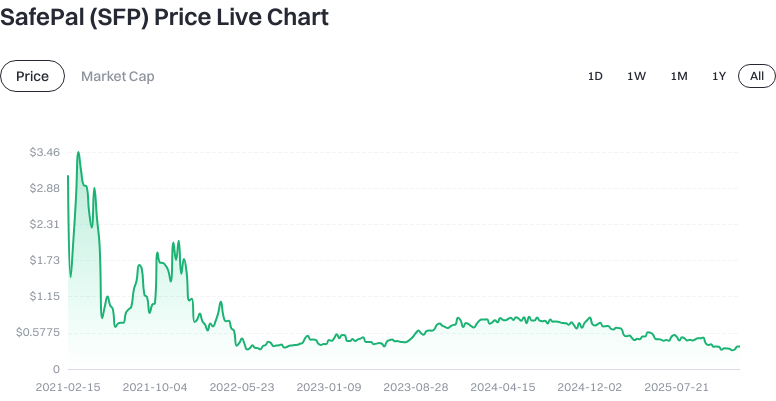
Перейдите по ссылке, чтобы посмотреть актуальные ценовые тренды SFP
Рыночная капитализация определяется как произведение цены на объём предложения в обращении и отражает общую стоимость актива на рынке. Объём предложения в обращении — это количество токенов, доступных для торговли.
Кто создал SafePal (SFP) и когда?
SFP запущен 7 февраля 2021 года для стимулов и управления внутри экосистемы кошелька SafePal. Проект предоставляет безопасные и удобные инструменты управления криптоактивами через мобильные приложения и аппаратные кошельки, поддерживает различные блокчейны, токены и NFT. SFP — универсальный токен экосистемы для оплаты комиссий, получения скидок, вознаграждений за стейкинг и управления сообществом.
Как работает SafePal (SFP)?
SFP выпускается как токен стандарта BEP-20 в сети BNB Chain. Внутри экосистемы SafePal пользователи оплачивают продукты и услуги SFP со скидкой. Стейкинг — это блокировка токенов в специальных программах для получения дохода; например, можно разместить SFP в SafePal Earn и получать вознаграждение. В управлении держатели могут предлагать инициативы и голосовать по вопросам, например, по казначейству или новым функциям, влияя на развитие экосистемы. Стандартизированный токен SFP совместим с кошельками, приложениями и кроссчейновыми инструментами, поддерживающими BNB Chain.
Что можно делать с SafePal (SFP)?
Основные сценарии использования SFP:
- Платежи и скидки: оплата комиссий за продукты и услуги кошелька с эксклюзивными скидками.
- Вознаграждения за стейкинг: участие в программах стейкинга для получения дохода или бонусных баллов.
- Голосование по управлению: голосование за интеграцию новых сетей, запуск функций, использование казначейства и другие инициативы.
- Активности и коллекционные предметы: получение купонов или специальных коллекционных предметов на официальных или партнерских мероприятиях для держателей.
Эти возможности интегрируют SFP с продуктами кошелька, формируя замкнутый цикл «использование–стимул–управление».
Кошельки и расширения в экосистеме SafePal (SFP)
Экосистема SafePal включает мобильный кошелек, аппаратный кошелек и инструменты-расширения. Мобильное приложение предназначено для ежедневных переводов, работы с блокчейном и управления активами; аппаратный кошелек хранит приватные ключи офлайн, минимизируя риски онлайн-атак; инструменты-расширения обеспечивают подключение к децентрализованным приложениям (DApps). Поддерживаются основные блокчейны, такие как BNB Chain, а также различные токены и NFT — пользователи могут управлять активами и транзакциями в разных сетях через единый интерфейс.
Основные риски и регуляторные аспекты SafePal (SFP)
Волатильность цен: стоимость криптоактивов сильно зависит от рыночных настроений и ликвидности, возможны значительные краткосрочные колебания.
Технические и риски смарт-контрактов: операции с кроссчейновыми переводами, смарт-контрактами или сторонними DApps могут создавать уязвимости или несанкционированный доступ.
Безопасность приватных ключей и мнемонических фраз: мнемонические фразы — единственный способ восстановления кошелька, их нельзя фотографировать или хранить онлайн, необходимо записывать и хранить офлайн. Аппаратные кошельки снижают риски атак, но требуют физической защиты.
Риски стейкинга и ликвидности: стейкинг может предусматривать блокировку или изменяемую доходность, важно изучать правила программ и условия вывода.
Регулирование и соответствие: регулирование криптовалют различается по странам и может затрагивать депозиты, торговлю или налоговую отчётность, всегда соблюдайте местные законы.
Риски использования биржи: включайте двухфакторную аутентификацию для защиты аккаунта, остерегайтесь фишинговых ссылок и поддельных приложений.
Как купить и безопасно хранить SafePal (SFP) на Gate
Шаг 1: Зарегистрируйтесь на gate.com, пройдите верификацию по email или телефону и идентификацию для повышения безопасности и лимитов транзакций.
Шаг 2: Внесите или купите USDT. Используйте фиатные каналы для покупки USDT или переведите с другого кошелька на свой аккаунт Gate — убедитесь в правильности выбора сети и адреса депозита.
Шаг 3: Найдите торговую пару “SFP/USDT” на странице торговли, выберите лимитный или рыночный ордер, укажите количество и цену, затем подтвердите заявку.
Шаг 4: Выведите SFP на свой личный кошелек для самостоятельного управления. Как токен стандарта BEP-20 в сети BNB Chain, выберите BNB Chain как сеть вывода и убедитесь, что адрес получателя поддерживает её — неправильный выбор сети может привести к потере активов.
Шаг 5: Безопасное хранение и настройка. Для мобильных кошельков — сохраните мнемонические фразы офлайн, для аппаратных — установите надёжный PIN-код. Включайте двухфакторную аутентификацию для аккаунта Gate и приложений-кошельков для защиты от фишинга и кражи аккаунта.
Шаг 6: Дальнейшее использование. При участии в стейкинге или управлении пользуйтесь официальными каналами и проверенными контрактами, проверяйте сроки блокировки, динамику доходности и условия вывода.
Сравнение: SafePal (SFP) и TrustWallet
Позиционирование и поддержка аппаратных решений: SafePal предлагает аппаратные кошельки и мобильные приложения с акцентом на офлайн-защиту приватных ключей, TrustWallet ориентирован на мобильный опыт с внешними аппаратными опциями.
Утилитарность токенов: SFP используется для оплаты комиссий, скидок, вознаграждений за стейкинг и управления в своей экосистеме, TWT — для стимулов сообщества, управления и партнёрских бонусов. Оба токена — управляющие и стимулирующие, но SFP акцентирует интеграцию с аппаратными устройствами и оплату комиссий.
Блокчейн и стандарты: оба используют стандартные протоколы токенов в сети BNB Chain для совместимости с DApp, фактическая поддержка кроссчейнов зависит от интеграции каждого кошелька.
Пользовательская база и сценарии: пользователи, которым важна офлайн-безопасность и хранение на аппаратных устройствах, могут предпочесть SafePal; тем, кто ищет лёгкое мобильное решение, подойдёт TrustWallet. Решения дополняют друг друга — можно комбинировать их по необходимости.
Резюме по SafePal (SFP)
SFP — утилитарный токен для экосистемы кошелька SafePal, соединяющий пользователей с продуктами и сервисами через оплату комиссий, скидки, вознаграждения за стейкинг и голосование по управлению. Рыночная капитализация и структура предложения демонстрируют фиксированный лимит выпуска. SFP используется для расчётов в экосистеме, участия в стейкинге, управления и получения бонусов на мероприятиях. Новичкам, покупающим SFP на Gate, важно внимательно относиться к настройке аккаунта, совместимости сети вывода, офлайн-резервному копированию мнемонических фраз и двухфакторной аутентификации, а также изучать условия блокировки перед стейкингом. Использование SFP как «утилитарного и управляющего токена» в экосистеме кошелька может быть выгодным при понимании рисков и соблюдении законодательства.
FAQ
Какие практические применения токенов SFP?
SFP — управляющий токен экосистемы SafePal, держатели могут голосовать по ключевым решениям платформы. Также он используется для оплаты расширенных функций кошелька, участия в ликвидити-майнинге и торгуется на биржах, таких как Gate. SFP сочетает права голосования и утилитарные функции.
Как участвовать в управлении экосистемой SafePal с SFP?
Держатели SFP могут голосовать по предложениям на официальной платформе управления SafePal, сила голоса пропорциональна количеству токенов. После покупки SFP на Gate переведите их на поддерживаемый адрес кошелька для участия в решениях по обновлениям функций или распределению средств, что позволяет влиять на развитие проекта.
Какой объём предложения SFP? Есть ли неограниченная эмиссия?
Максимальный объём предложения SFP — 100 млн токенов, риск неограниченной инфляции отсутствует. В проекте реализован механизм сжигания токенов для периодического уменьшения объёма предложения, поддерживая дефицит. Такая модель может способствовать долгосрочной стоимости, но зависит от фактического исполнения сжигания.
Нужно ли беспокоиться о краже при хранении SFP?
Безопасность ваших SFP полностью зависит от способа хранения. Официальный кошелёк SafePal обеспечивает аппаратную защиту, централизованные биржи, такие как Gate, требуют двухфакторной аутентификации и белых списков для вывода, самостоятельные кошельки требуют тщательного управления приватными ключами. Для крупных сумм рекомендуется хранить токены в SafePal или аппаратных кошельках.
Можно ли торговать SFP на крупных биржах?
SFP представлен на Gate, Binance, Coinbase и других ведущих биржах, обеспечен высокой ликвидностью и разнообразием торговых пар (например, SFP/USDT и SFP/ETH). Gate предлагает круглосуточную торговлю и удобные каналы для фиатных депозитов и выводов, что делает SFP доступным для начинающих трейдеров.
- Объём предложения в обращении: количество монет, доступных на рынке — используется для расчёта рыночной капитализации в обращении.
- Полностью разводнённая капитализация: общая рыночная стоимость при выпуске всех монет — отражает потенциальную долгосрочную стоимость.
- Доля рыночной капитализации: процент капитализации этой монеты относительно общей капитализации крипторынка — показатель позиции на рынке.
- Суточный объём торгов: общая стоимость сделок за последние 24 часа — отражает уровень ликвидности и активности.
- Изменение цены (%): процентное изменение цены монеты за определённый период — используется для анализа краткосрочных и долгосрочных тенденций.
Рекомендации и дополнительные материалы по SafePal (SFP)