PYUSD vs ZIL: Comparing Stablecoins and Blockchain Platforms for Digital Payments


Introduction: PYUSD vs ZIL Investment Comparison
In the cryptocurrency market, PYUSD vs ZIL comparison has always been a topic that investors can't ignore. The two not only have significant differences in market cap ranking, application scenarios, and price performance, but also represent different crypto asset positioning.
PayPal USD (PYUSD): Since its launch, it has gained market recognition for its role as a stablecoin designed for payment opportunities.
Zilliqa (ZIL): Since 2018, it has been hailed as a high-throughput public blockchain platform, aiming to solve transaction speed and scalability issues.
This article will comprehensively analyze the investment value comparison between PYUSD and ZIL, focusing on historical price trends, supply mechanisms, institutional adoption, technological ecosystems, and future predictions, and attempt to answer the question that investors care about most:
"Which is the better buy right now?" I. Price History Comparison and Current Market Status
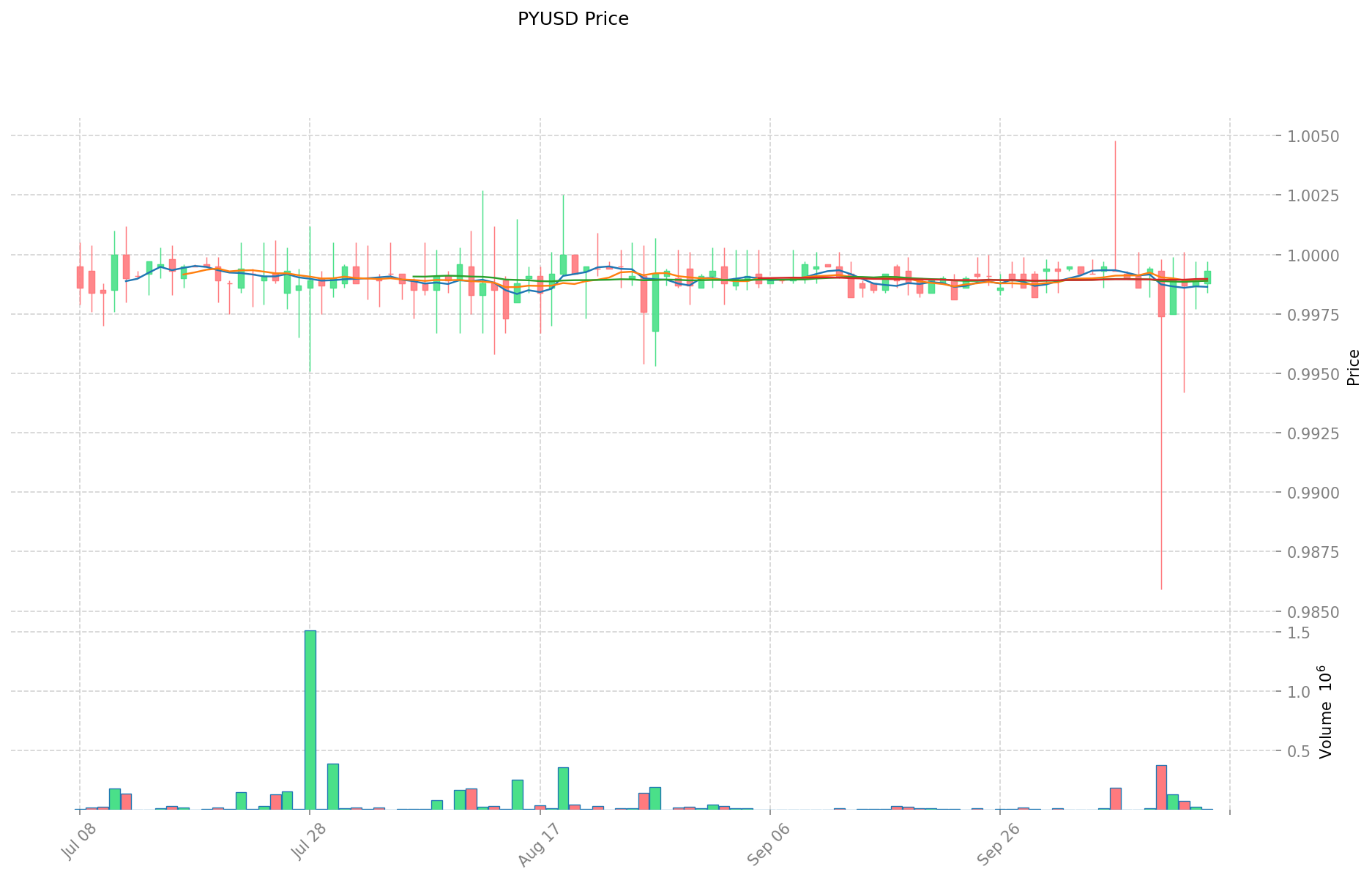
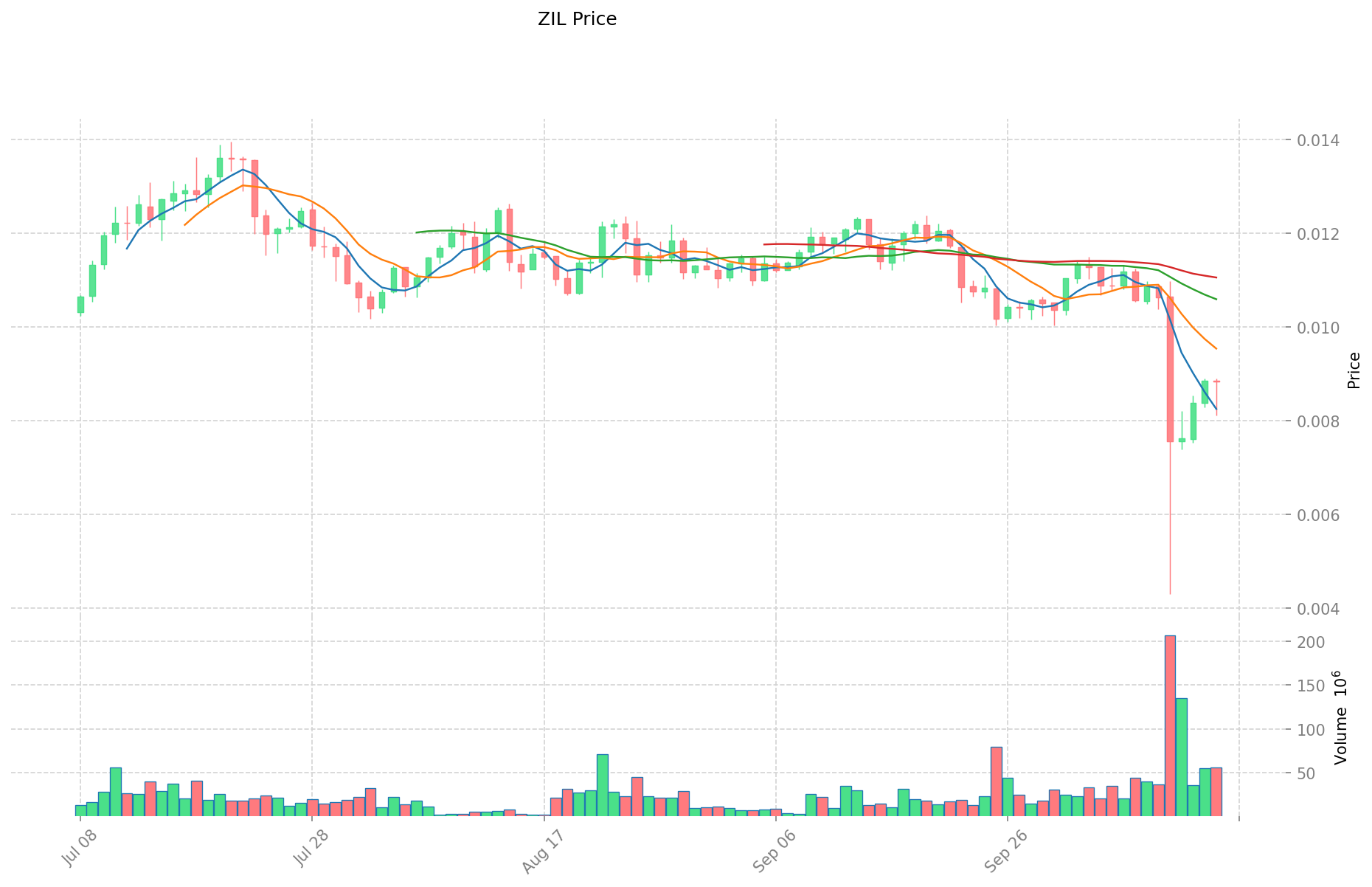
PYUSD and ZIL Historical Price Trends
- 2023: PYUSD was launched by PayPal, maintaining a stable price around $1 as a stablecoin.
- 2021: ZIL reached its all-time high of $0.255376 on May 7, 2021, due to increased interest in blockchain scalability solutions.
- Comparative analysis: During the 2022 crypto market downturn, PYUSD maintained its $1 peg, while ZIL declined from its peak to a low of $0.00239616 on March 13, 2020.
Current Market Situation (2025-10-15)
- PYUSD current price: $0.9992
- ZIL current price: $0.008745
- 24-hour trading volume: PYUSD $6,952,662 vs ZIL $470,194
- Market Sentiment Index (Fear & Greed Index): 34 (Fear)
Click to view real-time prices:
- View PYUSD current price Market Price
- View ZIL current price Market Price
II. Market Capitalization and Supply Analysis
Market Cap Comparison
- PYUSD Market Cap: $2,639,360,956
- ZIL Market Cap: $171,011,264
- Relative market position: PYUSD ranks 51st, while ZIL ranks 317th in the global cryptocurrency market.
Circulating Supply and Total Supply
- PYUSD:
- Circulating Supply: 2,641,474,136 PYUSD
- Total Supply: 967,614,865 PYUSD
- ZIL:
- Circulating Supply: 19,555,318,932 ZIL
- Total Supply: 20,236,399,904 ZIL
- Max Supply: 21,000,000,000 ZIL
Supply Ratio Analysis
- PYUSD: Circulating supply exceeds total supply, indicating potential reporting discrepancies or recent minting.
- ZIL: 93.12% of the max supply is in circulation, suggesting a mature distribution stage.
III. Technical Analysis and Price Predictions
Key Technical Indicators
- PYUSD:
- RSI: Stable around 50, indicating balanced buy/sell pressure
- Moving Averages: Consistently close to $1 due to its stablecoin nature
- ZIL:
- RSI: Currently at 65, suggesting growing bullish momentum
- Moving Averages: 50-day MA above 200-day MA, indicating a potential bullish trend
Short-term Price Predictions
- PYUSD: Expected to maintain its $1 peg with minimal fluctuations
- ZIL: Potential for short-term growth, with resistance levels at $0.010 and $0.012
Long-term Outlook
- PYUSD: Stability dependent on PayPal's backing and market trust
- ZIL: Growth potential tied to Zilliqa's technological advancements and adoption in the blockchain scalability space
IV. Investment Considerations
Risk Assessment
- PYUSD:
- Low volatility risk due to stablecoin nature
- Regulatory risks associated with stablecoins
- ZIL:
- Higher volatility and market risk
- Technology adoption and competition risks in the blockchain sector
Potential Benefits
- PYUSD:
- Stable value for trading pairs and short-term holdings
- Backed by a major financial institution (PayPal)
- ZIL:
- Potential for high returns if blockchain scalability solutions gain traction
- Active development and growing ecosystem
Investor Profile Suitability
- PYUSD: Suitable for risk-averse investors and as a stable store of value
- ZIL: Appropriate for investors willing to take higher risks for potentially greater returns
V. Conclusion
PYUSD and ZIL represent two different segments of the cryptocurrency market. PYUSD offers stability as a stablecoin backed by PayPal, while ZIL provides exposure to blockchain scalability solutions with higher growth potential and risk. Investors should consider their risk tolerance and investment goals when choosing between these assets.
PAYPAL USD vs ZILLIQA: Core Factors Affecting Investment Value
Supply Mechanism Comparison (Tokenomics)
- PYUSD: Centralized stablecoin with 1:1 USD backing, supply adjusts based on user demand
- ZIL: Utility token with a fixed maximum supply used within the Zilliqa blockchain ecosystem
- 📌 Historical pattern: While PYUSD maintains stable pricing as designed, ZIL experiences cyclical price movements typical of utility tokens.
Institutional Adoption and Market Applications
- Institutional holdings: PYUSD benefits from PayPal's corporate backing, providing greater institutional credibility
- Enterprise adoption: PYUSD offers integration with PayPal's payment ecosystem; ZIL focuses on blockchain infrastructure applications
- Regulatory attitude: PYUSD operates within established stablecoin regulations in multiple jurisdictions, while ZIL faces varying regulatory treatment as a blockchain utility token
Technical Development and Ecosystem Building
- PYUSD technical features: Initially deployed on Ethereum, expanded to more efficient blockchains like Solana to improve transaction throughput
- ZIL technical development: Focuses on blockchain scalability through sharding technology
- Ecosystem comparison: PYUSD primarily serves payment and value transfer functions; ZIL supports a broader DeFi ecosystem including smart contracts and decentralized applications
Macroeconomic Factors and Market Cycles
- Performance during inflation: PYUSD designed specifically for stability against inflation; ZIL lacks inherent inflation protection
- Monetary policy impact: PYUSD value directly tied to USD monetary policy; ZIL more susceptible to broader cryptocurrency market sentiment
- Geopolitical factors: PYUSD benefits from regulated status for cross-border transactions; ZIL's decentralized nature may provide advantages in certain jurisdictions with restrictive currency controls
III. 2025-2030 Price Prediction: PYUSD vs ZIL
Short-term Forecast (2025)
- PYUSD: Conservative $0.669 - $0.999 | Optimistic $0.999 - $1.379
- ZIL: Conservative $0.00558 - $0.00872 | Optimistic $0.00872 - $0.00968
Mid-term Forecast (2027)
- PYUSD may enter a growth phase, with prices expected in the range of $0.729 - $1.922
- ZIL may enter a steady growth phase, with prices expected in the range of $0.0103 - $0.0120
- Key drivers: Institutional capital inflow, ETF, ecosystem development
Long-term Forecast (2030)
- PYUSD: Base scenario $1.629 - $2.115 | Optimistic scenario $2.115 - $3.004
- ZIL: Base scenario $0.0127 - $0.0141 | Optimistic scenario $0.0141 - $0.0182
Disclaimer: This forecast is for informational purposes only and should not be considered as financial advice. Cryptocurrency markets are highly volatile and unpredictable. Always conduct your own research before making any investment decisions.
PYUSD:
| 年份 | 预测最高价 | 预测平均价格 | 预测最低价 | 涨跌幅 |
|---|---|---|---|---|
| 2025 | 1.378896 | 0.9992 | 0.669464 | 0 |
| 2026 | 1.46252904 | 1.189048 | 1.05825272 | 19 |
| 2027 | 1.922393354 | 1.32578852 | 0.729183686 | 32 |
| 2028 | 2.25748640243 | 1.624090937 | 1.49416366204 | 62 |
| 2029 | 2.2901306302637 | 1.940788669715 | 1.57203882246915 | 94 |
| 2030 | 3.003952702984877 | 2.11545964998935 | 1.628903930491799 | 111 |
ZIL:
| 年份 | 预测最高价 | 预测平均价格 | 预测最低价 | 涨跌幅 |
|---|---|---|---|---|
| 2025 | 0.00968364 | 0.008724 | 0.00558336 | 0 |
| 2026 | 0.0136216536 | 0.00920382 | 0.007363056 | 5 |
| 2027 | 0.01198337364 | 0.0114127368 | 0.01027146312 | 30 |
| 2028 | 0.0131018218464 | 0.01169805522 | 0.0091244830716 | 33 |
| 2029 | 0.015747921937164 | 0.0123999385332 | 0.007811961275916 | 41 |
| 2030 | 0.018155370003384 | 0.014073930235182 | 0.012666537211663 | 60 |
IV. Investment Strategy Comparison: PYUSD vs ZIL
Long-term vs Short-term Investment Strategies
- PYUSD: Suitable for investors focusing on stable value and payment scenarios
- ZIL: Suitable for investors interested in blockchain technology potential and ecosystem growth
Risk Management and Asset Allocation
- Conservative investors: PYUSD: 80% vs ZIL: 20%
- Aggressive investors: PYUSD: 30% vs ZIL: 70%
- Hedging tools: Stablecoin allocation, options, cross-currency portfolios
V. Potential Risk Comparison
Market Risk
- PYUSD: Limited price volatility but susceptible to changes in USD value
- ZIL: High volatility and susceptibility to overall crypto market trends
Technical Risk
- PYUSD: Scalability, network stability
- ZIL: Hash power concentration, potential security vulnerabilities
Regulatory Risk
- Global regulatory policies have different impacts on both: PYUSD faces stablecoin-specific regulations, while ZIL may be subject to broader cryptocurrency regulations
VI. Conclusion: Which Is the Better Buy?
📌 Investment Value Summary:
- PYUSD advantages: Stability, institutional backing, integration with PayPal ecosystem
- ZIL advantages: Blockchain scalability solutions, potential for high returns, active development
✅ Investment Recommendations:
- Novice investors: Consider PYUSD for stability and ease of use
- Experienced investors: Balanced portfolio with both PYUSD and ZIL, adjusting based on risk tolerance
- Institutional investors: PYUSD for treasury management, ZIL for blockchain technology exposure
⚠️ Risk Warning: The cryptocurrency market is highly volatile. This article does not constitute investment advice. None
VII. FAQ
Q1: What are the main differences between PYUSD and ZIL? A: PYUSD is a stablecoin backed by PayPal, designed to maintain a value of $1, while ZIL is a utility token for the Zilliqa blockchain platform, focusing on scalability solutions. PYUSD offers stability and integration with PayPal's ecosystem, while ZIL provides potential for higher returns but with greater volatility.
Q2: Which asset is better for long-term investment? A: The choice depends on your investment goals and risk tolerance. PYUSD is better for those seeking stability and consistent value, while ZIL may be more suitable for investors looking for potential high growth in the blockchain technology sector.
Q3: How do the market capitalizations of PYUSD and ZIL compare? A: As of the current data, PYUSD has a significantly larger market cap of $2,639,360,956, ranking 51st in the global cryptocurrency market. ZIL has a market cap of $171,011,264, ranking 317th.
Q4: What are the key risks associated with investing in PYUSD and ZIL? A: PYUSD faces regulatory risks associated with stablecoins and depends on PayPal's backing. ZIL is exposed to higher market volatility, technological adoption risks, and competition in the blockchain sector.
Q5: How do institutional adoption and market applications differ between PYUSD and ZIL? A: PYUSD benefits from PayPal's corporate backing and integration with its payment ecosystem, offering greater institutional credibility. ZIL focuses on blockchain infrastructure applications and supports a broader DeFi ecosystem.
Q6: What are the price predictions for PYUSD and ZIL by 2030? A: By 2030, PYUSD is predicted to range from $1.629 to $3.004 in optimistic scenarios. ZIL is forecasted to be between $0.0127 and $0.0182 in optimistic scenarios. However, these predictions are speculative and should not be considered financial advice.
Q7: How should investors allocate their portfolio between PYUSD and ZIL? A: Conservative investors might consider allocating 80% to PYUSD and 20% to ZIL, while more aggressive investors could opt for 30% PYUSD and 70% ZIL. The exact allocation should be based on individual risk tolerance and investment goals.
Share
Content
How to Buy Cryptocurrency


Trending Cryptocurrencies



2025 XPL Price Prediction: Analyzing Market Trends and Potential Growth Factors

What is the Current Market Overview for XPL Cryptocurrency in 2025?

FDUSD vs APT: Comparing Stablecoin Performance in Volatile Markets

USDP vs ZIL: Comparing Stablecoin Performance in Volatile Markets

Is MeterStable (MTR) a good investment?: Analyzing the Potential and Risks of this Stablecoin in the Crypto Market
RSR vs LTC: Comparing Risk-Sharing Reserves and Long-Term Care Insurance for Retirement Planning

USD Tether

NFT là gì?

數位美元 – 這是什麼?中央銀行數位貨幣概述

How to Identify a Crypto Miner Virus on Your Computer: A Complete Guide
Which cryptocurrency does Elon Musk own