Netflix Expands Interactive Strategy With Ready Player Me Acquisition
Netflix Strengthens Its Gaming and Interactive Content Portfolio
On December 20, Tech in Asia reported that Netflix has confirmed its acquisition of the metaverse identity platform Ready Player Me. While the transaction value and specific terms remain undisclosed, Netflix stated that this acquisition will enhance its TV gaming and interactive entertainment experiences, signaling its long-term commitment to gamified content and immersive storytelling.
As the streaming market’s growth slows and competition intensifies, Netflix is moving beyond traditional content streaming. The company is shifting toward more engaging and expansive entertainment formats, with gaming and interactive technologies forming the cornerstone of this evolution.
Ready Player Me to Cease Independent Operations
With the acquisition finalized, Ready Player Me has announced its transition plan. The platform will officially end its external services on January 31, 2026. All team members will join Netflix and become part of its internal research and product development teams.
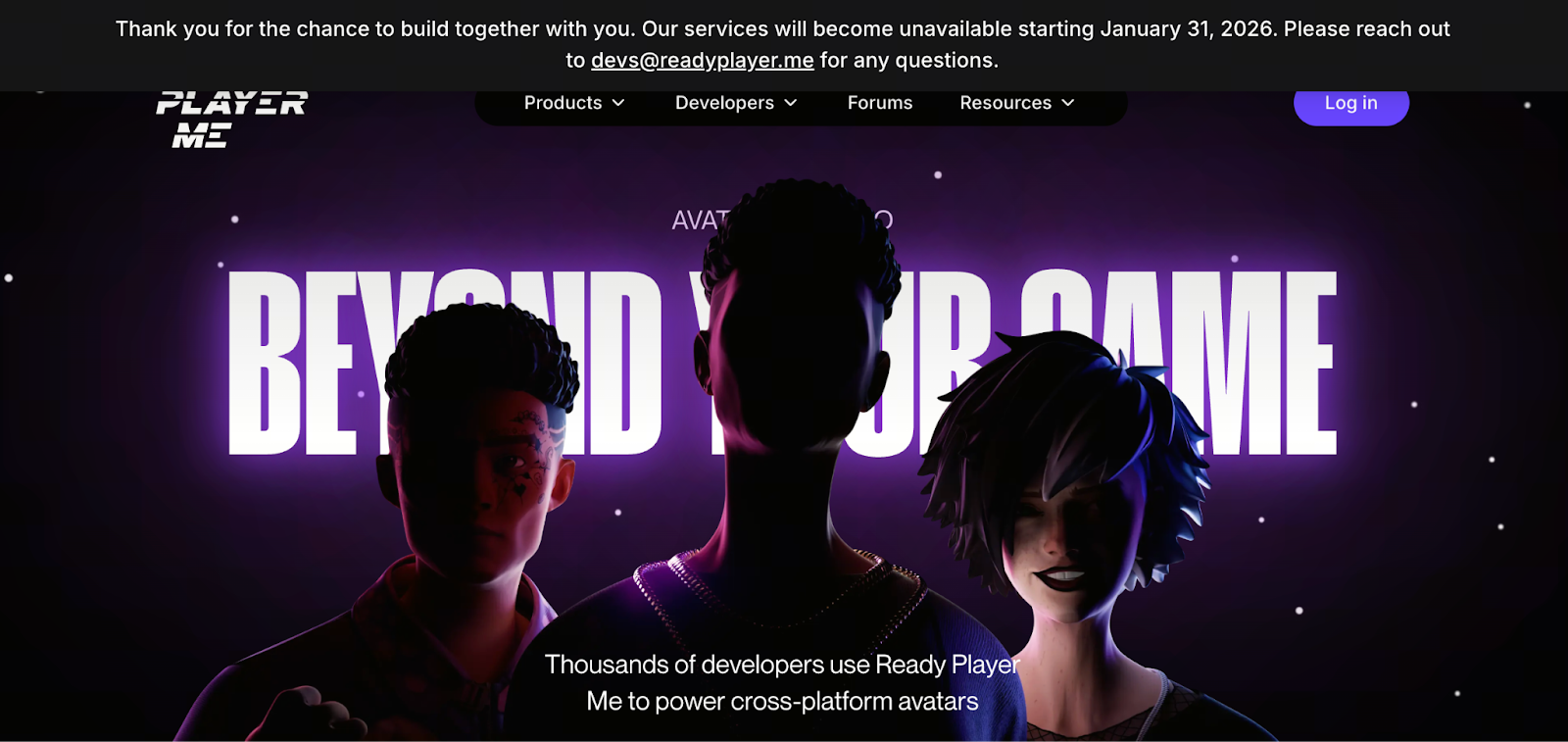
(Source: readyplayerme)
This transition means Ready Player Me will no longer operate as a standalone product. Instead, it will become an integral part of Netflix’s long-term technology stack, focusing on supporting interactive content, gaming experiences, and new digital identity applications.
A Formerly High-Profile Investment Team
Prior to its acquisition, Ready Player Me was a standout startup in the metaverse and Web3 space, raising about $72 million in total funding. Its investor roster included major industry figures such as a16z, Roblox co-founder David Baszucki, Twitch co-founder Justin Kan, and GitHub co-founder Tom Preston-Werner. This impressive background established Ready Player Me as a key infrastructure provider for metaverse identity solutions.
What Is Ready Player Me?
Ready Player Me’s core product is a cross-platform 3D avatar system. Users can quickly create personalized avatars via selfies or custom settings, then use them across more than 10,000 supported games, applications, and virtual worlds.
A single virtual identity can be used repeatedly across different platforms, significantly lowering entry barriers and enhancing consistency and continuity for digital identities. This capability is a major reason why Ready Player Me is favored for metaverse applications.
Identity Infrastructure for Developers
Beyond end users, Ready Player Me has long supported the developer community. With its SDK and API, developers can quickly integrate its avatar system into leading game engines like Unity and Unreal. This “one identity, many places” approach has made Ready Player Me the standard for cross-platform games, virtual social apps, and immersive experiences, solidifying its role as a foundational layer for metaverse identities.
From Metaverse Tool to Mainstream Entertainment Core Technology
Netflix’s acquisition sends a clear message: virtual identity technology is moving out of its niche in early metaverse and Web3 circles and into the core technology stack of mainstream entertainment platforms. For Netflix, Ready Player Me is more than an avatar tool—it’s a platform that powers interactive storytelling, game character extensions, and persistent digital identities across content. It also lays the groundwork for deeper interactive series, gamified IP, and multi-device immersive experiences.
To learn more about Web3, register here: https://www.gate.com/
Summary
Netflix’s acquisition of Ready Player Me is not just a technology buy—it’s a strategic consolidation of capabilities. The deal shows that mainstream content platforms are rapidly integrating core technologies developed for the metaverse era, repackaging them for mass-market entertainment. As virtual identities, gaming, and interactive content converge, Ready Player Me’s transformation could mark a pivotal moment in Netflix’s push toward next-generation entertainment.
Share
Content


Related Articles

2025 BTC Price Prediction: BTC Trend Forecast Based on Technical and Macroeconomic Data

Flare Crypto Explained: What Is Flare Network and Why It Matters in 2025

Pi Coin Transaction Guide: How to Transfer to Gate.com

How to Use a Crypto Whale Tracker: Top Tool Recommendation for 2025 to Follow Whale Moves

What is N2: An AI-Driven Layer 2 Solution