AXS vs AAVE: Comparing Two Leading Crypto Assets in the DeFi and Gaming Sectors

10-18-2025, 12:20:53 AM
Blockchain
DeFi
Gaming
Investing In Crypto
NFTs
Article Rating : 3.7
half-star
0 ratings
Explore the comprehensive comparison between Axie Infinity (AXS) and AAVE, two leading crypto assets in gaming and DeFi sectors, as you delve into their investment potential. The article analyzes historical price trends, supply mechanisms, institutional adoption, and technological development to evaluate "Which is the better buy right now?" Detailed insights on market risks, regulatory challenges, and investment strategies are tailored for both new and experienced investors. Discover price forecasts up to 2030 and trade insights from trusted platforms like Gate. Ideal for those seeking to diversify with blockchain gaming or DeFi lending assets.
AXS vs AAVE: Comparing Two Leading Crypto Assets in the DeFi and Gaming Sectors

Introduction: AXS vs AAVE Investment Comparison

In the cryptocurrency market, the comparison between Axie Infinity (AXS) vs AAVE (AAVE) has always been an unavoidable topic for investors. The two not only have significant differences in market cap ranking, application scenarios, and price performance, but also represent different crypto asset positions.

Axie Infinity (AXS): Since its launch in 2020, it has gained market recognition for its blockchain-based gaming ecosystem.

AAVE (AAVE): Since its introduction in 2020, it has been hailed as a leading decentralized lending protocol, becoming one of the cryptocurrencies with the highest global trading volume and market capitalization.

This article will comprehensively analyze the investment value comparison between AXS vs AAVE, focusing on historical price trends, supply mechanisms, institutional adoption, technological ecosystems, and future predictions, and attempt to answer the question that investors are most concerned about:

"Which is the better buy right now?"

I. Price History Comparison and Current Market Status

  • 2021: AXS reached its all-time high of $164.9 on November 7, 2021.
  • 2020: AAVE was launched in October 2020, with a starting price of $1.7.
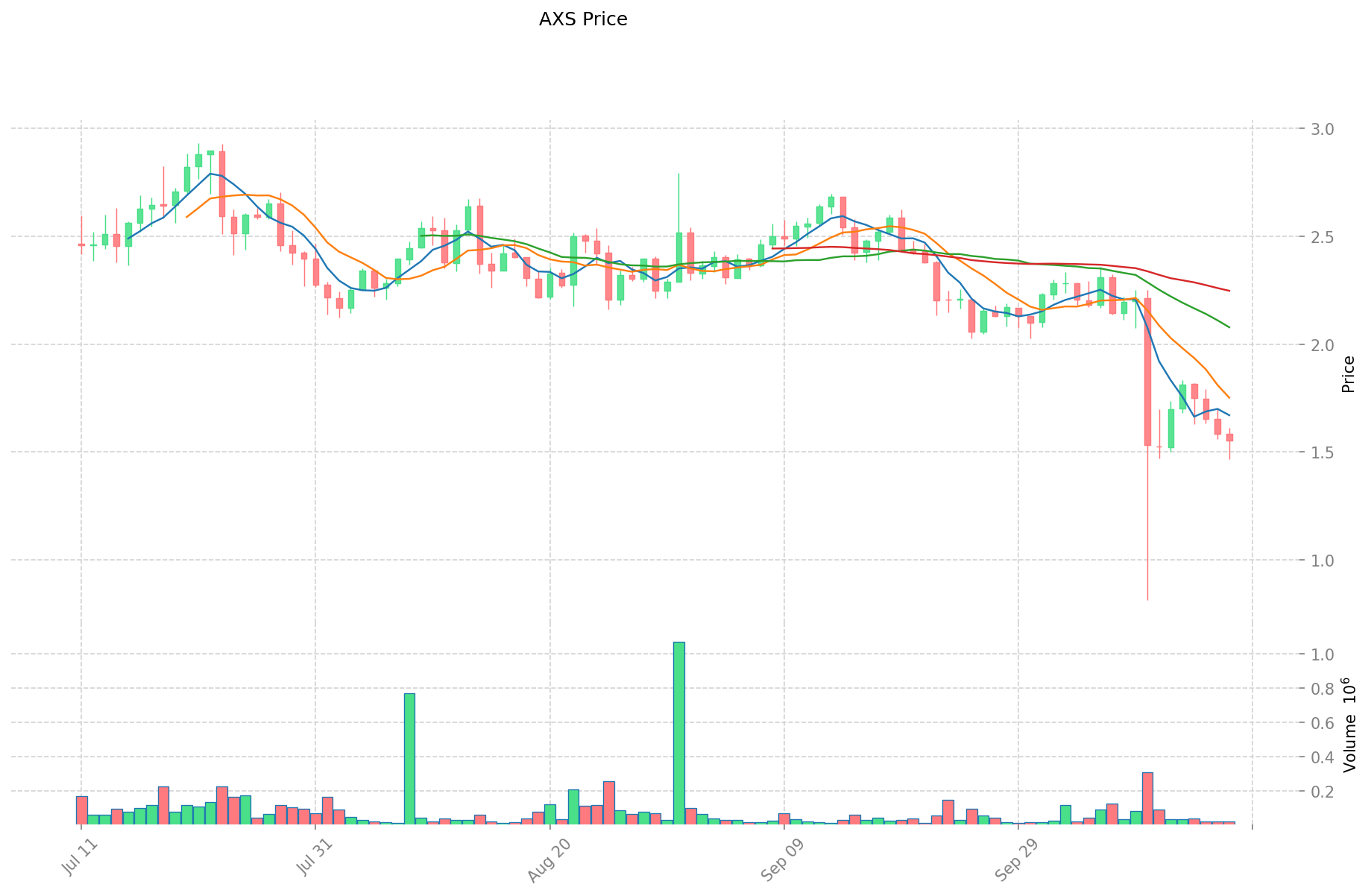
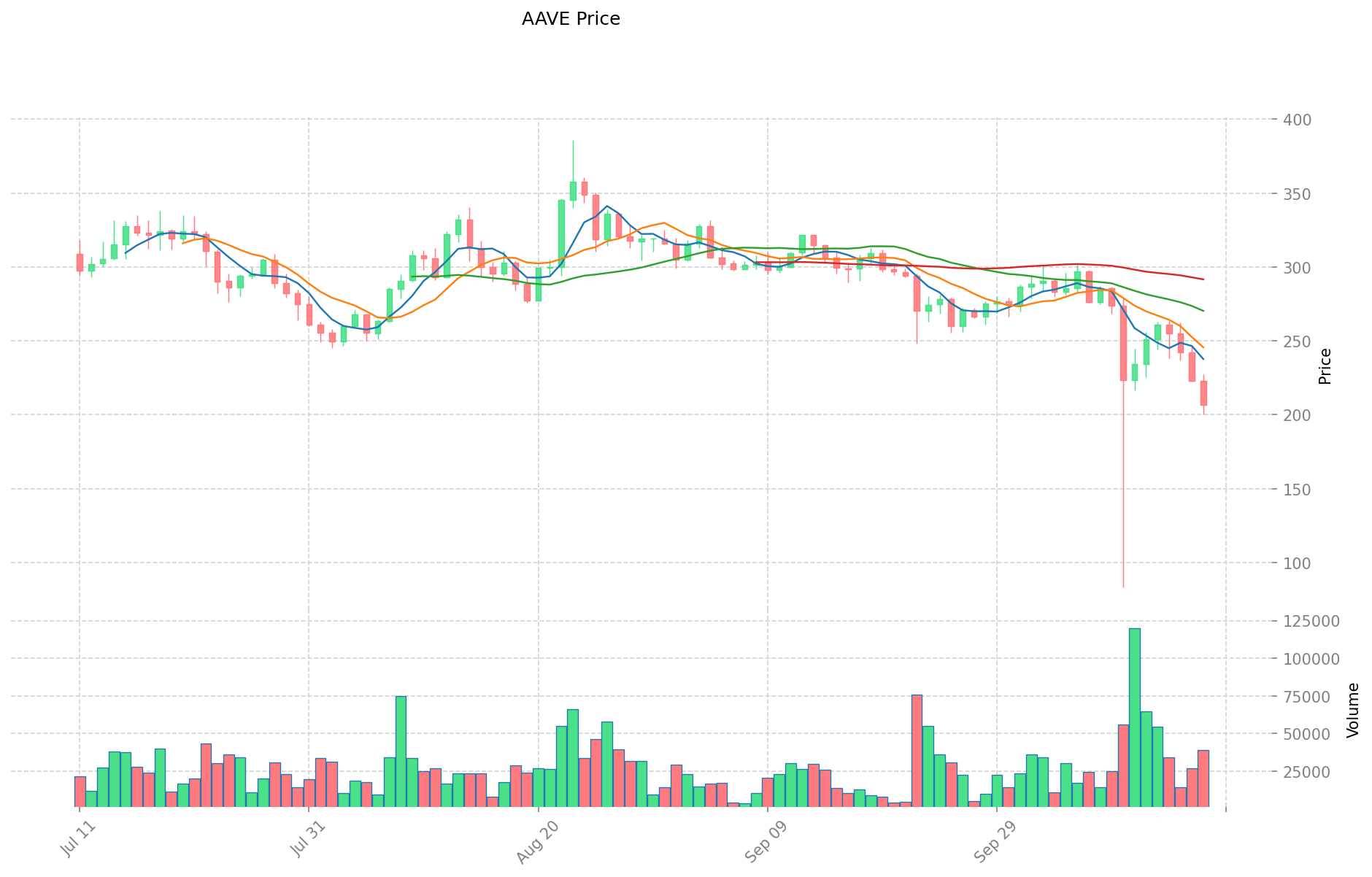
  • Comparative analysis: Since their respective peaks, AXS has fallen from $164.9 to its current price of $1.55, while AAVE has shown more resilience, currently trading at $206.15.

Current Market Situation (2025-10-18)

  • AXS current price: $1.55
  • AAVE current price: $206.15
  • 24-hour trading volume: AXS $32,420.45 vs AAVE $8,141,980.83
  • Market Sentiment Index (Fear & Greed Index): 22 (Extreme Fear)

Click to view real-time prices:

price_image1 price_image2

II. Key Factors Affecting the Investment Value of AXS vs AAVE

Supply Mechanism Comparison (Tokenomics)

  • AXS: Fixed maximum supply of 270 million tokens with a release schedule through 2026. Includes staking rewards and play-to-earn mechanics that influence circulation.
  • AAVE: Maximum supply of 16 million tokens. Features a burn mechanism where a portion of protocol fees reduces supply, creating deflationary pressure.
  • 📌 Historical Pattern: Deflationary models like AAVE's tend to support price stability during market downturns, while AXS's gaming-dependent tokenomics creates more volatile but potentially higher growth during bull markets.

Institutional Adoption and Market Applications

  • Institutional Holdings: AAVE has gained more institutional traction through DeFi treasury allocations and institutional lending platforms, while AXS remains primarily retail-focused.
  • Enterprise Adoption: AAVE has seen integration with traditional finance platforms for lending services, whereas AXS is primarily adopted by gaming studios and metaverse projects.
  • Regulatory Attitudes: AAVE faces more scrutiny in lending regulations, particularly in the US, while AXS faces gaming and NFT-related regulations in various jurisdictions.

Technical Development and Ecosystem Building

  • AXS Technical Upgrades: Expansion to mobile platforms, improving Land gameplay, and developing Axie Infinity: Origin to enhance user experience and gameplay economics.
  • AAVE Technical Development: Implementation of V3 protocol with isolation mode, efficiency mode, and portal features that improve capital efficiency and cross-chain functionality.
  • Ecosystem Comparison: AAVE dominates in DeFi lending across multiple blockchains with over $5 billion in TVL, while AXS leads in gaming NFTs but faces challenges in sustaining its play-to-earn model.

Macroeconomic Factors and Market Cycles

  • Performance in Inflationary Environments: AAVE demonstrates more stability during inflation due to its utility as a lending protocol, while AXS shows higher correlation to discretionary spending patterns.
  • Monetary Policy Impact: Interest rate hikes have historically pressured both assets, with AAVE showing more immediate reaction due to yield competition from traditional markets.
  • Geopolitical Factors: AAVE benefits from increased DeFi adoption during financial uncertainty, while AXS depends more on entertainment spending and digital property investment trends. III. 2025-2030 Price Predictions: AXS vs AAVE

Short-term Forecast (2025)

  • AXS: Conservative $1.07 - $1.55 | Optimistic $1.55 - $1.63
  • AAVE: Conservative $136.11 - $206.22 | Optimistic $206.22 - $220.66

Mid-term Forecast (2027)

  • AXS may enter a growth phase, with prices expected in the range of $1.04 - $2.48
  • AAVE may enter a growth phase, with prices expected in the range of $174.52 - $318.68
  • Key drivers: Institutional capital inflow, ETF, ecosystem development

Long-term Forecast (2030)

  • AXS: Base scenario $1.88 - $2.77 | Optimistic scenario $2.77 - $3.10
  • AAVE: Base scenario $237.15 - $316.20 | Optimistic scenario $316.20 - $442.68

View detailed price predictions for AXS and AAVE

Disclaimer: The information provided is for informational purposes only and should not be considered as financial advice. Cryptocurrency markets are highly volatile and unpredictable. Always conduct your own research before making any investment decisions.

AXS:

年份 预测最高价 预测平均价格 预测最低价 涨跌幅
2025 1.62855 1.551 1.07019 0
2026 2.11440075 1.589775 1.144638 2
2027 2.4817977525 1.852087875 1.03716921 19
2028 3.20707536435 2.16694281375 1.1051408350125 39
2029 2.848229634393 2.68700908905 2.257087634802 73
2030 3.09973368512808 2.7676193617215 1.88198116597062 78

AAVE:

年份 预测最高价 预测平均价格 预测最低价 涨跌幅
2025 220.6554 206.22 136.1052 0
2026 292.409649 213.4377 147.272013 3
2027 318.68382987 252.9236745 174.517335405 22
2028 294.37786475055 285.803752185 171.482251311 38
2029 342.3071539919745 290.090808467775 147.94631231856525 40
2030 442.67857372182465 316.19898122987475 237.149235922406062 53

IV. Investment Strategy Comparison: AXS vs AAVE

Long-term vs Short-term Investment Strategies

  • AXS: Suitable for investors focused on gaming ecosystems and NFT potential
  • AAVE: Suitable for investors seeking DeFi exposure and yield-generating assets

Risk Management and Asset Allocation

  • Conservative investors: AXS: 20% vs AAVE: 80%
  • Aggressive investors: AXS: 40% vs AAVE: 60%
  • Hedging tools: Stablecoin allocation, options, cross-token portfolio

V. Potential Risk Comparison

Market Risk

  • AXS: Highly dependent on gaming industry trends and user adoption
  • AAVE: Sensitive to DeFi market conditions and competition from other lending protocols

Technical Risk

  • AXS: Scalability issues, network stability during peak gaming periods
  • AAVE: Smart contract vulnerabilities, liquidity risks in extreme market conditions

Regulatory Risk

  • Global regulatory policies may impact AXS through gaming and NFT regulations, while AAVE faces scrutiny in DeFi lending practices

VI. Conclusion: Which Is the Better Buy?

📌 Investment Value Summary:

  • AXS advantages: Leading position in blockchain gaming, strong community engagement
  • AAVE advantages: Established DeFi lending protocol, multi-chain presence, deflationary tokenomics

✅ Investment Advice:

  • New investors: Consider a balanced approach with a higher allocation to AAVE for stability
  • Experienced investors: Explore strategic positions in both, with AXS for growth potential and AAVE for DeFi exposure
  • Institutional investors: Focus on AAVE for its institutional adoption and integration with traditional finance

⚠️ Risk Warning: The cryptocurrency market is highly volatile, and this article does not constitute investment advice. None

VII. FAQ

Q1: What are the main differences between AXS and AAVE? A: AXS is a token for the blockchain-based gaming ecosystem Axie Infinity, while AAVE is the native token of a leading decentralized lending protocol. AXS is more focused on gaming and NFTs, while AAVE is centered on DeFi lending services.

Q2: Which token has shown better price stability? A: AAVE has demonstrated better price stability compared to AXS. Since their respective peaks, AXS has fallen significantly from $164.9 to $1.55, while AAVE has shown more resilience, currently trading at $206.15.

Q3: How do the supply mechanisms of AXS and AAVE differ? A: AXS has a fixed maximum supply of 270 million tokens with a release schedule through 2026, while AAVE has a maximum supply of 16 million tokens with a burn mechanism that reduces supply over time, creating deflationary pressure.

Q4: Which token has gained more institutional adoption? A: AAVE has gained more institutional traction through DeFi treasury allocations and integration with traditional finance platforms for lending services. AXS remains primarily retail-focused and adopted by gaming studios and metaverse projects.

Q5: What are the key factors affecting the long-term value of each token? A: For AXS, key factors include the growth of the blockchain gaming industry, user adoption, and ecosystem development. For AAVE, factors include DeFi market conditions, regulatory developments in lending practices, and technological advancements in the protocol.

Q6: How do the 2030 price predictions compare for AXS and AAVE? A: The long-term forecast for 2030 predicts AXS could reach $1.88 - $3.10, while AAVE is expected to be in the range of $237.15 - $442.68. AAVE shows a higher potential price range in these predictions.

Q7: What investment strategy is recommended for each token? A: For AXS, it's suitable for investors focused on gaming ecosystems and NFT potential, while AAVE is recommended for those seeking DeFi exposure and yield-generating assets. Conservative investors might allocate 20% to AXS and 80% to AAVE, while aggressive investors might opt for a 40% AXS to 60% AAVE split.

* The information is not intended to be and does not constitute financial advice or any other recommendation of any sort offered or endorsed by Gate.
Related Articles
PYR vs AVAX: Comparative Analysis of Two Leading Blockchain Platforms for Gaming and DeFi Applications

PYR vs AVAX: Comparative Analysis of Two Leading Blockchain Platforms for Gaming and DeFi Applications

In this article, delve into the comparative analysis of two prominent blockchain platforms, PYR and AVAX, focusing on gaming and DeFi applications. Explore historical price trends, tokenomics, institutional adoption, and technical development, providing a comprehensive investment guide addressing the question, "Which is the better buy right now?" Examine price predictions from 2025-2030, and weigh investment strategies and potential risks for both tokens. Suitable for both new and seasoned cryptocurrency investors aiming to optimize asset allocation and understand market dynamics. Check real-time prices on Gate and formulate informed decisions based on detailed insights into market performance and future potential.
10-4-2025, 12:27:00 AM
YFI vs ENJ: A Comparative Analysis of DeFi and NFT-Focused Cryptocurrencies

YFI vs ENJ: A Comparative Analysis of DeFi and NFT-Focused Cryptocurrencies

The article "YFI vs ENJ: A Comparative Analysis of DeFi and NFT-Focused Cryptocurrencies" provides a clear overview of the investment landscape between YearnFinance (YFI) and Enjin Coin (ENJ). It analyzes historical price trends, supply mechanisms, and market applications, addressing investor concerns about which cryptocurrency might be the better buy. Suitable for both new and experienced investors, the article highlights key factors affecting investment value, technical developments, and potential risks. The piece is structured to offer insights into strategic allocation and long-term predictions, aiding informed decision-making in volatile markets.
11-16-2025, 12:14:00 AM
Is BORA (BORA) a good investment?: Analyzing the potential and risks of this blockchain platform token

Is BORA (BORA) a good investment?: Analyzing the potential and risks of this blockchain platform token

This article delves into BORA (BORA), examining its investment potential against its evolution, market status, and technological framework. With insights into past price movements and a current market overview, it addresses questions about BORA’s investment prospects. The piece also explores risks associated with investing in BORA, offering strategic insights for beginners, experienced, and institutional investors. Key elements include the project's ecosystem, distribution mechanics, and long-term price outlook, providing valuable guidance for those considering BORA in the blockchain gaming and content sector. Readers can engage with detailed analyses suited for informed decision-making.
11-17-2025, 7:24:40 AM
DCB vs ENJ: Comparing Two Blockchain Gaming Platforms for the Future of Digital Assets

DCB vs ENJ: Comparing Two Blockchain Gaming Platforms for the Future of Digital Assets

This article offers a detailed comparison between Decubate (DCB) and Enjin Coin (ENJ), two prominent blockchain gaming platforms. It evaluates the investment value of each by examining historical price trends, market status, supply mechanisms, institutional adoption, and technological ecosystems. Aimed at helping investors decide "which is the better buy," it provides insights into price predictions and investment strategies, addressing risks and investment advice tailored to novice, experienced, and institutional investors. Key topics include market dynamics, tokenomics, and regulatory impacts, with real-time prices available through Gate.
11-25-2025, 6:11:55 AM
SQR vs FLOW: Comparing Two Innovative Approaches to Agile Project Management

SQR vs FLOW: Comparing Two Innovative Approaches to Agile Project Management

This article delves into a detailed comparison of Magic Square (SQR) and Flow (FLOW) within the crypto market, focusing on their investment potential. It covers historical price trends, technical ecosystems, and institutional adoption to determine which token presents a better buying opportunity. Readers gain insights into supply mechanisms, market sentiment, and risk management strategies, aiding both new and seasoned investors in making informed decisions. Key questions addressed include performance comparisons and long-term investment viability, with a focus on DeFi versus NFT and gaming sectors. For real-time data, consult Gate.
11-26-2025, 11:12:07 PM
SHARE vs ENJ: Comparing Two Blockchain Gaming Platforms for the Future of Digital Asset Ownership

SHARE vs ENJ: Comparing Two Blockchain Gaming Platforms for the Future of Digital Asset Ownership

This article delves into comparing SHARE and ENJ, two prominent blockchain gaming platforms, focusing on digital asset ownership. It evaluates their historical price trends, supply mechanisms, institutional adoption, technical ecosystems, and potential investment strategies. Targeting both novice and experienced investors, it addresses key concerns such as pricing, risk management, and long-term value. The structure follows a logical flow: starting with an introduction, then comparing price histories, core investment factors, future price projections, investment strategy analysis, risk assessment, and concluding with buying recommendations. Key topics include cryptocurrency, blockchain gaming, and digital assets.
11-29-2025, 4:14:19 PM
Recommended for You
What is POLYX Price Volatility: Historical Trends, Support & Resistance Levels, and 2025 Price Prediction?

What is POLYX Price Volatility: Historical Trends, Support & Resistance Levels, and 2025 Price Prediction?

The article offers a detailed analysis of POLYX's price volatility, historical trends, technical levels, and projected performance up to 2025. It addresses the needs of investors by discussing key price metrics, market dynamics, and risk assessments tied to broader cryptocurrency trends. The structure includes a historical price movement overview, technical analysis of support and resistance levels, recent volatility insights, and market correlation analysis. Keywords like "POLYX price trends," "technical levels," and "risk assessment" enhance SEO readability while catering to crypto traders looking for informed decisions without the specifics of Gate being mentioned.
12-22-2025, 8:50:56 AM
What are the biggest cryptocurrency security risks in 2025: smart contract vulnerabilities, network attacks, and exchange custody concerns?

What are the biggest cryptocurrency security risks in 2025: smart contract vulnerabilities, network attacks, and exchange custody concerns?

This article examines the biggest cryptocurrency security risks in 2025, focusing on smart contract vulnerabilities, network-level attacks, and centralized exchange custody concerns. It outlines how access control flaws and reentrancy attacks significantly impact DeFi platforms, while emerging techniques target decentralized networks' infrastructure. Additionally, it highlights the systemic threats posed by centralized exchanges like Gate, requiring robust mitigation strategies. The content provides valuable insights for crypto investors and security professionals seeking to understand and navigate evolving risks. Key themes include vulnerability types, financial impacts, and strategic defenses.
12-22-2025, 8:49:02 AM
What are the main smart contract vulnerabilities and security risks in Syrup and DeFi protocols?

What are the main smart contract vulnerabilities and security risks in Syrup and DeFi protocols?

The article delves into smart contract vulnerabilities and security risks within Syrup and DeFi protocols, highlighting reentrancy attacks, oracle manipulation, and flash loan exploits. It discusses how centralized dependencies and network security threats affect institutional lending frameworks like Maple Finance, particularly during the 2022 DeFi crisis, leading to significant liquidity issues. The text also addresses impermanent loss and yield farming risks, providing strategies to mitigate such challenges. This content is crucial for institutional investors, developers, and DeFi enthusiasts seeking to understand and manage security risks in decentralized finance ecosystems.
12-22-2025, 8:47:13 AM
What is BITBOARD: A Comprehensive Guide to Chess Programming's Most Powerful Data Structure

What is BITBOARD: A Comprehensive Guide to Chess Programming's Most Powerful Data Structure

The article provides an in-depth overview of BITBOARD, a blockchain-based ranking and voting platform with immediate finality and high transaction throughput, aiming to improve user accessibility and reduce blockchain operational costs. It covers BITBOARD’s market performance, emphasizing its technical infrastructure and growth milestones, detailing how the platform operates on Polygon for scalability and security. Key points include pricing dynamics, trading information on Gate, and community engagement. This guide is ideal for those interested in innovative blockchain solutions for voting mechanisms and understanding their market implications.
12-22-2025, 8:43:05 AM
What is on-chain data analysis? A complete guide to active addresses, whale movements, and transaction trends

What is on-chain data analysis? A complete guide to active addresses, whale movements, and transaction trends

This guide offers comprehensive insights into on-chain data analysis, focusing on active addresses, whale movements, and transaction trends. It caters to blockchain enthusiasts, investors, and analysts aiming to understand network health and user engagement through key metrics. The article explores transaction volume and value, revealing capital flow patterns and market activity. It further delves into large holder distribution, assessing whale concentration risks and market influences. Finally, it evaluates on-chain fee trends, highlighting network cost efficiency and transaction optimization. Keywords like blockchain, active addresses, whale movements, and transaction trends enhance readability for quick scanning.
12-22-2025, 8:42:54 AM
What is TOKEN: A Comprehensive Guide to Understanding Digital Tokens in Blockchain and Cryptocurrency

What is TOKEN: A Comprehensive Guide to Understanding Digital Tokens in Blockchain and Cryptocurrency

This article provides a comprehensive guide to understanding TokenFi (TOKEN), a no-code tokenization platform aiming to democratize token creation and asset tokenization, critical as the industry eyes a $16 trillion valuation by 2030. It addresses accessibility, complexity, technical barriers, and market penetration, benefiting enterprises, individuals, and institutional adopters. Structured into sections detailing TokenFi's positioning, technological infrastructure, market analysis, and risk assessment, the article targets investors seeking insights into blockchain-based token solutions. Keywords: TokenFi, tokenization, blockchain, TokenFi market analysis, cryptocurrency investment.
12-22-2025, 8:42:31 AM