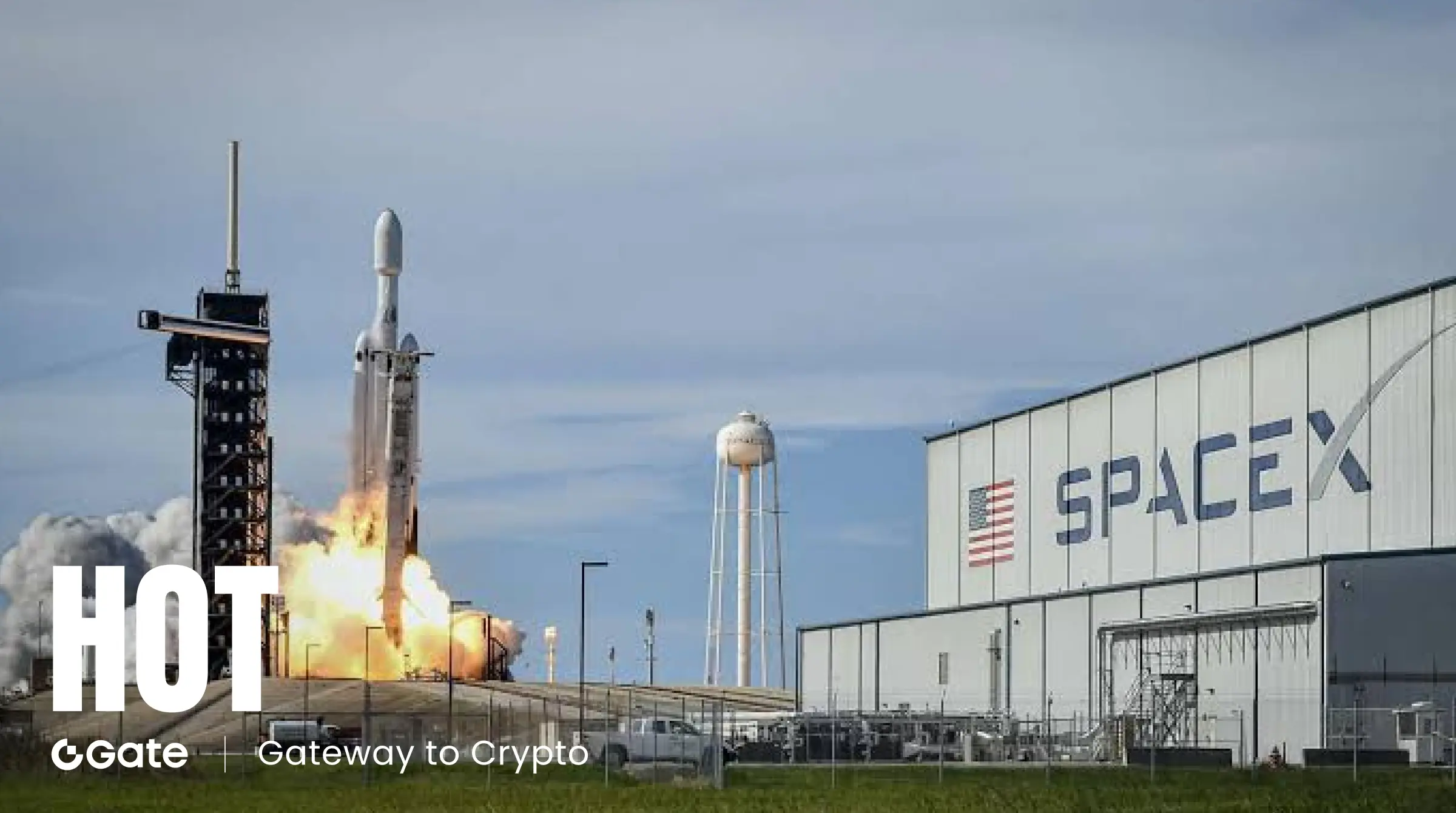
On July 7, 2026, before the US stock market opened, SpaceX (ticker: SPCX) officially became a constituent of the Nasdaq 100 Index. From its listing on Nasdaq on June 12 to joining this globally most influential tech index, SPCX took only 15 trading days. This not only set the fastest inclusion record since the inception of the Nasdaq 100 Index, but also marks the first time in the index's history that a company centered on aerospace business has been included.
How can a company listed for only three weeks enter the world's core tech stock index in such a short time? What does this ultra-fast inclusion mean for the index structure, passive fund flows, and the broader capital market?
What is "15-Day Inclusion": What the Fast-Track Rule Changes
SpaceX's ability to be included in the Nasdaq 100 Index in 15 trading days is not a special favor, but based on a new rule officially launched in May 2026.
Before this, new stocks typically needed to wait a full quarter before being considered for inclusion in the Nasdaq 100. But the new rule establishes a "fast-track entry" for ultra-large IPOs: newly listed companies meeting a specific market cap threshold can qualify for inclusion after trading for 15 consecutive trading days, without needing to meet the traditional "seasoning" requirement.
SpaceX is the first beneficiary after this rule took effect. The logic behind Nasdaq's introduction of this mechanism is not complicated—for super giants whose market cap is sufficient to directly affect the index's representativeness, delaying inclusion would instead harm the index's ability to reflect the true market structure. This rule change itself reveals a deep evolution in index compilation logic from "time priority" to "size priority".
After Inclusion in the Nasdaq 100, What Is SPCX's Weight and Rank?
Being included in the index is one thing, but what position it holds in the index is another. Since the Nasdaq 100 Index uses free-float market cap weighting, SpaceX's initial weight is not proportional to its total market cap of about $2.1 trillion.
In this IPO, SpaceX only released about 4% of its shares for public market trading. Nasdaq calculates weight based on the size of freely tradable shares, not total shares. JPMorgan estimates show that SpaceX's weight in the index is about 1.3%, ranking roughly 21st among Nasdaq 100 constituents.
For reference, NVIDIA's weight in the index is about 8.7%, Apple's about 7.6%, and Microsoft's about 5.6%.
In other words, although SpaceX's total market cap ranks among the top globally, its weight ranking in the Nasdaq 100 is only at the mid-to-upper level. This structural feature will directly determine the actual scale and market impact of passive fund buying.
Passive Fund Inflow: $4.3 Billion or $35 Billion?
The most direct capital market effect of index inclusion is triggering passive buying by ETFs and index funds tracking the index.
JPMorgan estimates that just the Nasdaq 100 inclusion alone could attract about $4.3 billion in passive fund inflows into SpaceX stock. This scale is based on over 200 investment products tracking the Nasdaq 100 Index, with total assets under management exceeding $800 billion.
But if the view is expanded to a broader index system, the numbers are quite different. MSCI and FTSE Russell global indices also included SpaceX in their benchmark portfolios during the same period. Comprehensive estimates show that the total scale of global passive funds buying SpaceX due to various index inclusions within 15 trading days could be as high as about $35 billion.
However, the scale of passive buying does not equal market impact. Since SpaceX's publicly traded shares only account for 3% to 5% of total shares, any large-scale buying could amplify price volatility in limited liquidity. But at the same time, a weight of only 1.3% means that each index-tracking fund needs to buy a relatively limited amount of SPCX shares. The true impact of passive buying depends on the complex interplay between buying pace, market liquidity, and investor expectations.
Historic Inclusion or Valuation Bubble: Why the Market Is So Divided
Regarding SpaceX's index inclusion, the market has not formed a unanimous bullish expectation. On the contrary, the confrontation between bulls and bears is exceptionally clear.
The bullish logic is built on three pillars: the passive buying demand brought by index inclusion, the research coverage effect released when Wall Street banks are allowed to publish ratings after the IPO quiet period ends, and SpaceX's long-term growth narrative on three business lines: Starlink, reusable rockets, and AI infrastructure. On July 7 itself, Morgan Stanley gave an "overweight" rating and a $300 price target, while UBS and Goldman Sachs gave $210 and $205 price targets respectively.
The bearish logic points in another direction. SPCX briefly hit a high of $225.64 within the first week of listing, then pulled back to about $160, a drawdown of about 29% from the high. At $160.42, the stock price is still about 19% above the IPO price of $135, but has shrunk significantly from the peak.
More critical is the supply-side pressure. As multiple lock-up periods expire in the coming weeks and months, insider selling could form continuous downward pressure on the stock price. Renowned investor Jeremy Grantham publicly criticized SpaceX's valuation on the eve of inclusion. CBOE senior vice president JJ Kinahan warned investors to be prepared for possible $20-level two-way volatility in the next 11 days.
Aerospace Companies Entering Tech Index: The Industry Structure of the Nasdaq 100 Is Changing
SpaceX's inclusion is not just an event for a single company; it also reflects a deep-seated change in the industry composition of the Nasdaq 100 Index.
The Nasdaq 100 has long been regarded as a "tech stock index", but its industry distribution is actually more diverse than this label. As of 2026, the information technology sector accounts for about 56.8% of the index weight, communication services about 14.6%, consumer discretionary about 11.9%, in addition to sectors such as consumer staples, healthcare, and industrials. Tech-related sectors total about 71%.
The addition of SpaceX brings a new industry dimension to the index—commercial aerospace. This is the first time in the history of the Nasdaq 100 that a company focused on space launch and satellite operations as its core business has been included. This change is in line with the trend of including AI infrastructure companies such as CoreWeave and Astera Labs in the June 2026 quarterly rebalancing—the index is expanding from traditional tech giants toward a broader "next-generation technology infrastructure" direction.
The continued evolution of this trend may reshape the connotation of the Nasdaq 100 as a "tech barometer"—from a binary dominance of consumer internet and semiconductors to a landscape where multiple tech tracks such as aerospace, AI infrastructure, and quantum computing coexist.
After Inclusion: How to Balance SPCX's Long-Term Logic and Short-Term Disturbances
The passive buying brought by index inclusion is a one-time mechanical event, not a sustained valuation support. SPCX's long-term pricing logic ultimately has to return to fundamentals.
SpaceX's current core business lines include three levels: the first is commercial rocket launch services, which have established a significant launch cost advantage through reusable technology; the second is Starlink satellite internet, which is building a broadband network covering billions of potential users globally; the third is the AI infrastructure being deployed—the company has announced the construction of an approximately 250-megawatt AI data center in the U.S. Midwest, directly using the Starlink satellite network for data transmission capabilities.
These three business lines correspond to different market valuation logics and risk characteristics. Rocket launch is a mature but limited-growth business; Starlink is in a high-expansion period but with huge capital expenditure; AI infrastructure is a brand new strategic direction that has not yet generated substantial revenue contributions.
At the same time, SpaceX's current price-to-earnings ratio of about 85 times is far higher than the valuation levels of traditional aerospace companies. High valuation itself implies extremely high expectations for future growth—any business progress that falls short of expectations could trigger a valuation reassessment.
FAQ
Q: When did SpaceX officially become part of the Nasdaq 100 Index?
A: SpaceX (SPCX) officially became a constituent of the Nasdaq 100 Index on July 7, 2026, before the US stock market opened.
Q: How long did it take from SpaceX's listing to index inclusion?
A: SpaceX listed on Nasdaq on June 12, and was included in the index on July 7, totaling 15 trading days, setting the fastest inclusion record since the inception of the Nasdaq 100.
Q: What is the "fast-track" inclusion rule?
A: Nasdaq launched a new rule in May 2026, allowing ultra-large IPOs to be included in the Nasdaq 100 Index after trading for 15 consecutive trading days, without waiting for the traditional quarterly review cycle.
Q: What is SpaceX's weight in the Nasdaq 100 Index?
A: JPMorgan estimates show that SPCX's weight in the index is about 1.3%, ranking roughly 21st among constituents.
Q: How much passive fund buying will index inclusion bring?
A: Just the Nasdaq 100 inclusion itself is expected to attract about $4.3 billion in passive funds; if including global index systems such as MSCI and FTSE Russell, the total scale could be as high as about $35 billion.
Q: Will SPCX's stock price rise after inclusion?
A: Index inclusion brings passive buying demand, but also faces supply pressure from lock-up expirations and high valuation controversy. The market generally expects SPCX to continue its high volatility characteristics after inclusion.


