


#USMayCPIHits3YearHigh
#MacroAnalysis #USInflation #CPIShock
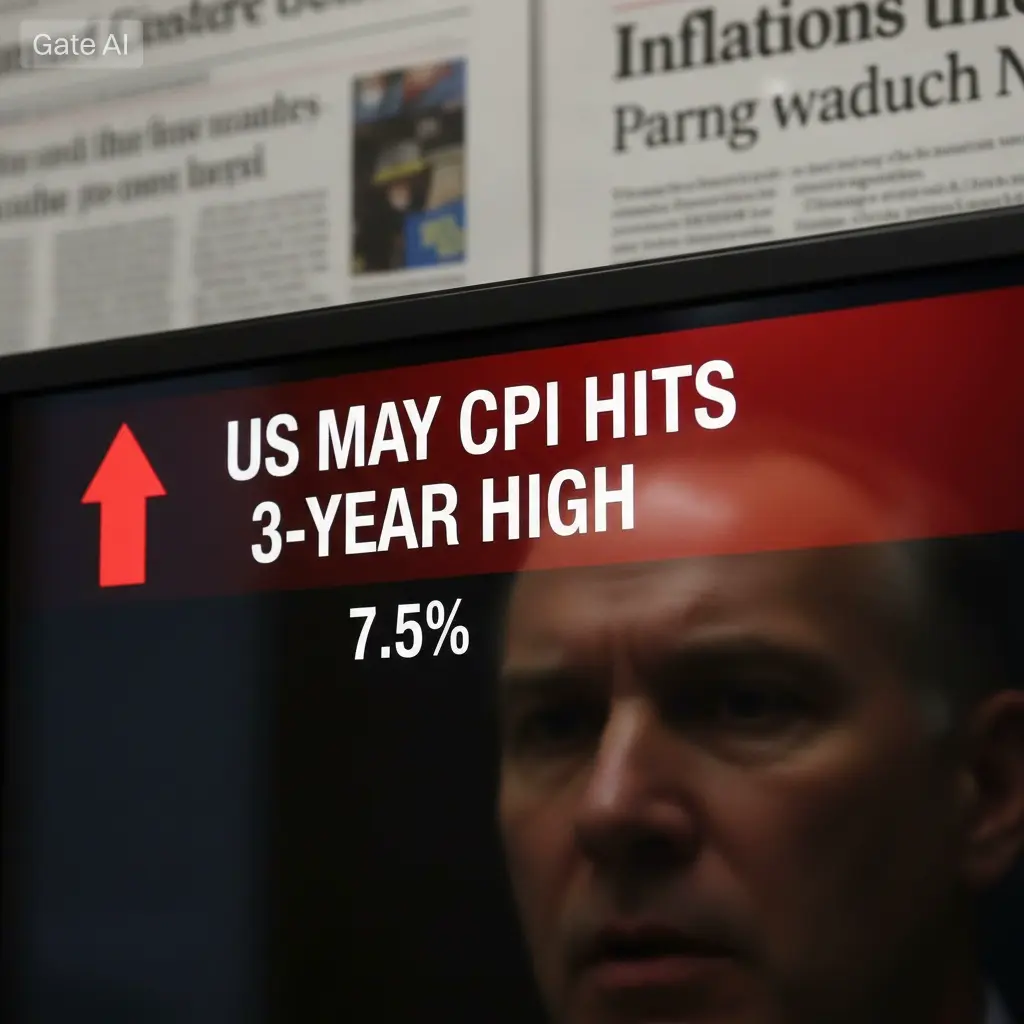
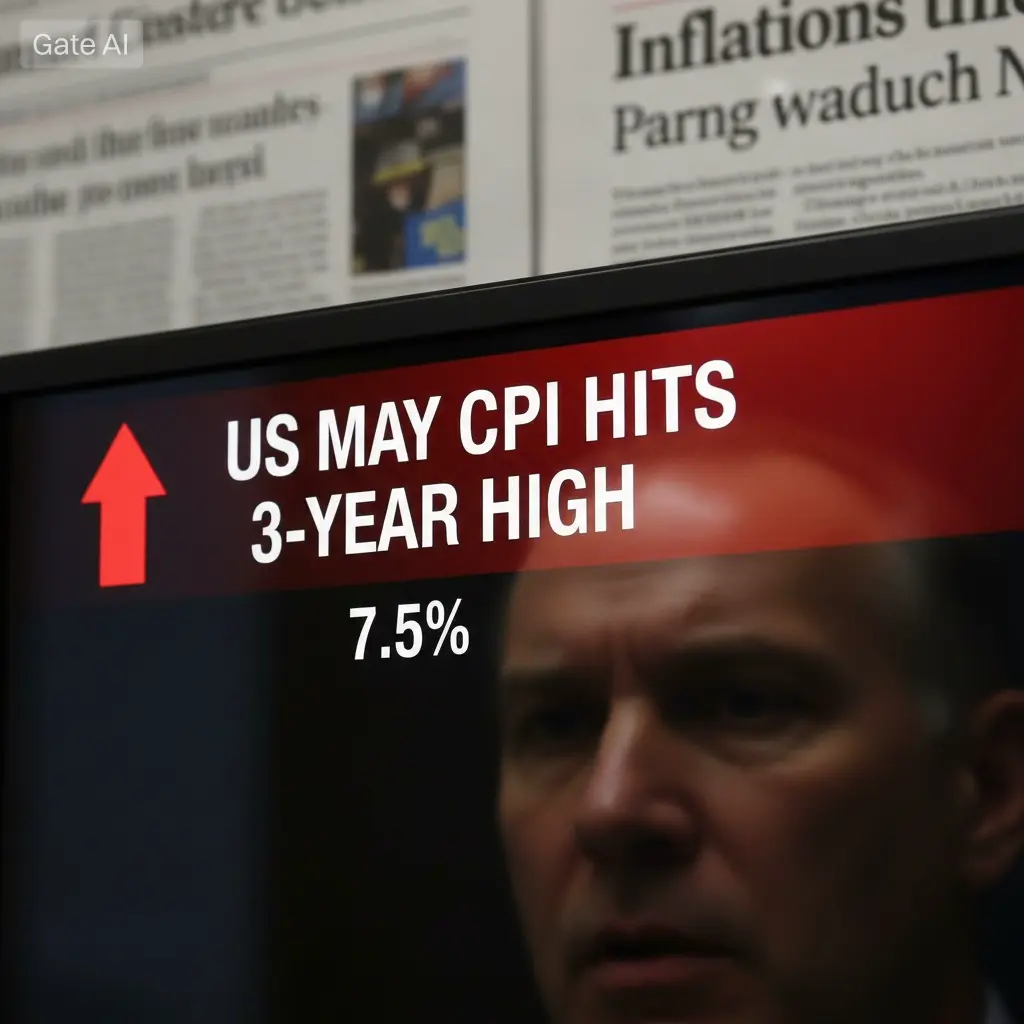
US May CPI just hit 4.2 percent. A three-year high that shatters every dovish narrative the Fed sold markets for months. This is not transitory. This is not seasonal noise. This is a structural repricing event that forces every quant desk and every macro hedge fund to tear up their models and start over.
Markets were positioned for a dovish pivot. Rate cut expectations were baked into bond curves, equity multiples, and crypto valuations. That entire positioning framework is now invalidated. The inflation trajectory has broken through every assumption of Fed rate cuts, and the fallout is far more severe than headline numbers suggest.
Treasury yields are spiking as real money recalibrates duration risk. This spike translates directly into higher borrowing costs across the corporate sector, the consumer economy, and the sovereign debt stack. Companies relying on cheap revolving credit face margin compression. Consumers carrying variable-rate debt see disposable income evaporate. The Fed cannot cut because inflation refuses to cooperate, and the market cannot rally because the discount rate keeps climbing.
The equity fallout is concentrated but cascading. Tech and growth stocks are selling off sharply because their entire valuation model depends on low discount rates projecting future cash flows into present value. When rates rise, those distant cash flows get crushed. This is not about individual company earnings missing estimates. This is about the mathematical framework that justified premium multiples collapsing under its own weight.
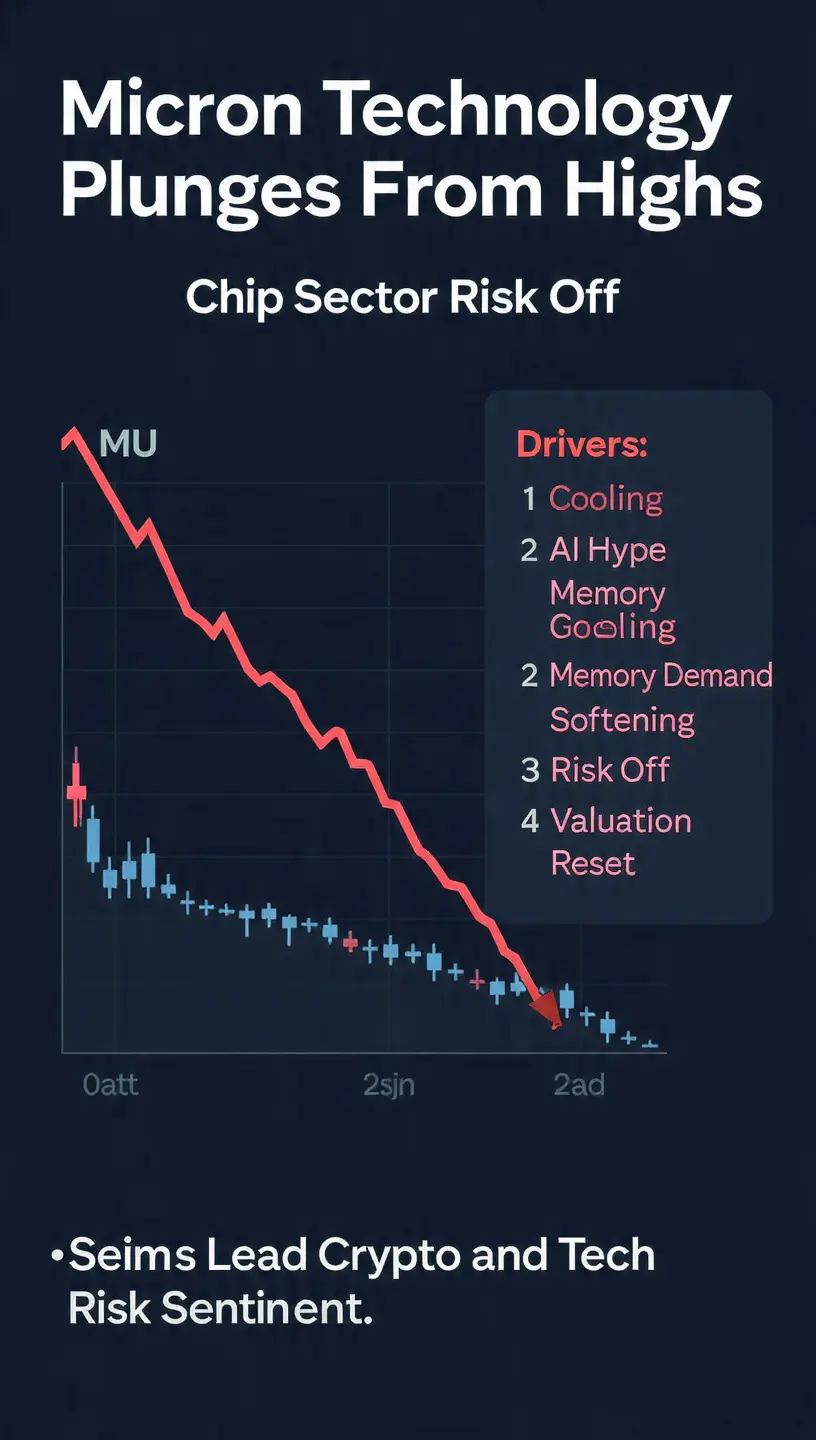
The semiconductor sector is experiencing a particularly brutal correction. It sits at the intersection of two crushing forces. First, the macro repricing hits high-beta growth names with maximum leverage to rate expectations. Second, the fundamental demand narrative driving semiconductor premiums, AI infrastructure spending and data center buildouts, is now being questioned as enterprise budgets face tighter credit conditions and slower deployment timelines. When macro and micro forces align against you, the correction is not a dip. It is a structural reset.
The US Dollar is strengthening on higher rate expectations, and this strength is not just a forex headline. It is a global liquidity drain. A stronger dollar pulls capital out of emerging markets, compresses foreign central bank reserves, and forces dollar-denominated debt servicing costs higher across the developing world. This is the exact mechanism that triggered previous emerging market crises. The dollar strength cycle feeds on itself. More capital concentrates in US dollar assets, the rest of the world faces tighter conditions, which drives more capital toward the dollar, which tightens conditions further.
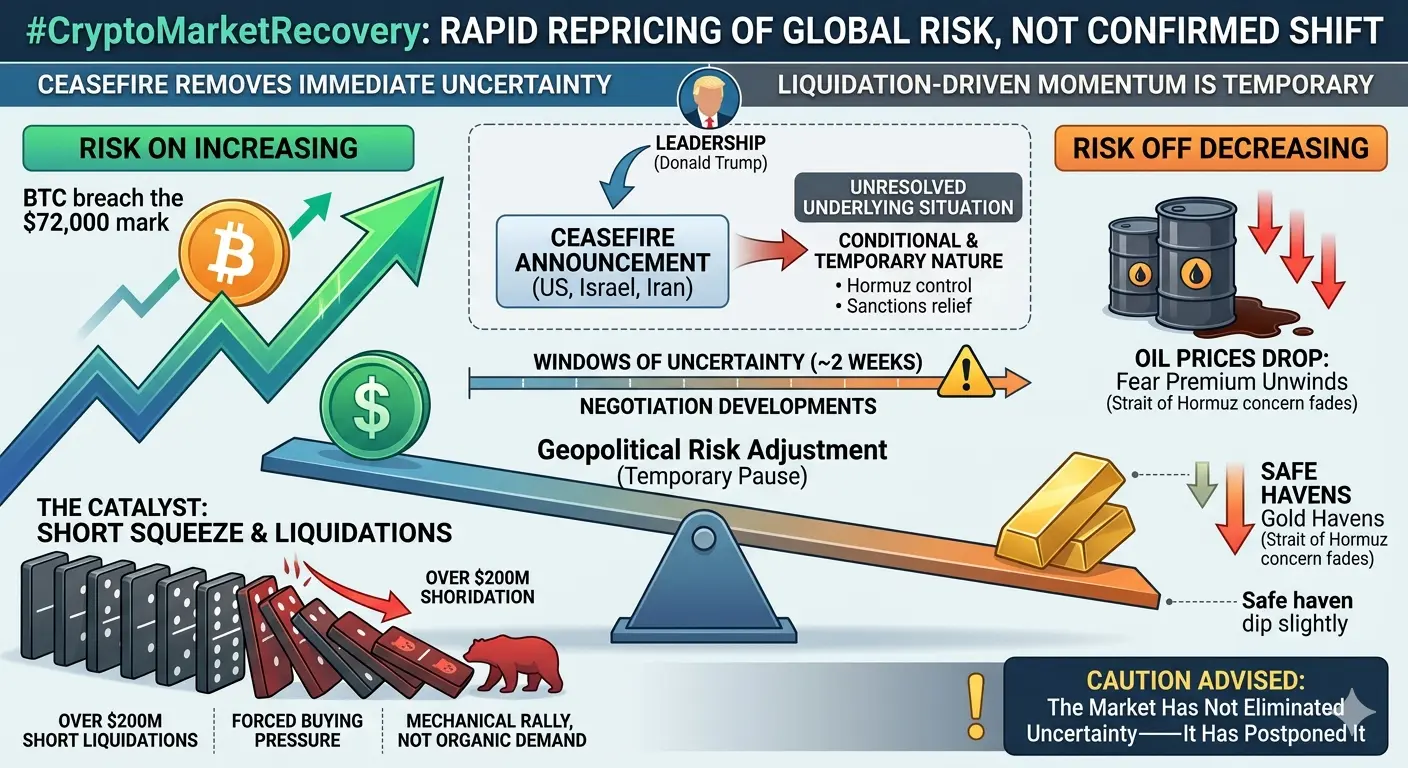
Bitcoin and the broader crypto complex are facing liquidations and risk-off pressure that goes beyond simple correlation. Crypto assets were bid up on the narrative of institutional adoption, regulatory clarity, and portfolio diversification. But when cross-asset correlations spike during a volatility regime shift, the diversification thesis collapses. Bitcoin is no longer an uncorrelated hedge. It is a high-beta risk asset that trades in lockstep with growth equities during stress events. The liquidation cascades are not random. They are the mechanical result of leveraged positioning unwinding when the funding environment reverses.
Cross-asset correlations are increasing across markets because the common denominator, global liquidity, is tightening everywhere simultaneously. When liquidity is abundant, assets can decouple and trade on idiosyncratic narratives. When liquidity contracts, everything gets pulled toward the same gravitational center. Equities, credit, crypto, commodities all start moving together. Risk management frameworks that assumed diversification benefits break down. This correlation spike is the hallmark of a regime transition, and it means that traditional portfolio construction assumptions are now unreliable.
Global liquidity is tightening as central banks are forced to maintain restrictive posture. The Fed cannot cut with inflation at 4.2 percent. The ECB faces its own inflation persistence problems. The Bank of Japan is finally normalizing after decades of ultra-loose policy. The combined effect is a synchronized withdrawal of the liquidity subsidy that fueled every asset rally since 2020. Markets are not just losing one source of support. They are losing all of them at the same time.
Volatility and choppy conditions are expected ahead because regime transitions do not resolve in clean trends. They resolve in violent whipsaws as different participant classes fight for positioning dominance. Quant funds are recalibrating signal parameters. Hedge funds are unwinding crowded thematic exposures. Real money is extending duration on defensive assets. Retail is getting crushed on leveraged carry trades. Every participant reacts to the same macro shock but with different time horizons and risk tolerances, and that collision produces choppy, high-volatility price action that punishes directional conviction.
The institutional response is already underway. Macro desks are rebuilding correlation matrices with updated regime assumptions. Risk committees are tightening position limits and raising margin requirements. Portfolio construction teams are rotating from growth to defensive positioning, from long duration to short duration, from idiosyncratic alpha to macro beta hedging. This is not a tactical adjustment. This is a strategic reallocation that will define performance for the next twelve to eighteen months.
Key Takeaways:
CPI at 4.2 percent kills the transitory narrative for good. The Fed's credibility on inflation management is now formally broken. Markets must price rate persistence, not rate cuts.
Treasury yield spikes are not a bond market story. They are an economy-wide borrowing cost accelerator that compresses margins, crushes consumer spending, and raises sovereign debt servicing burdens simultaneously.
Tech and growth valuations face mathematical repricing. When discount rates rise, future cash flows lose present value. Premium multiples cannot survive in a high-rate regime without fundamental earnings growth to compensate.
Semiconductor correction is structural, not cyclical. Macro repricing combined with weakening AI demand narrative creates a dual-force scenario that does not resolve with a simple dip buy.
Dollar strength is a global liquidity drain mechanism. Capital flows concentrate in US assets while emerging markets face reserve compression and debt servicing crises. This feedback loop accelerates itself.
Crypto diversification thesis is dead. Bitcoin trades as a high-beta risk asset during stress, not as an uncorrelated hedge. Liquidation cascades are mechanical positioning unwinds, not sentiment shifts.
Cross-asset correlation spikes signal regime transition. Diversification benefits collapse when global liquidity tightens everywhere at once. Portfolio construction assumptions must be rebuilt from scratch.
What makes this CPI print particularly dangerous is that it comes after months of market complacency. The VIX was suppressed. Credit spreads were tight. Implied correlation was low. All of those conditions were built on the assumption that inflation was trending toward the Fed target. That assumption is now dead. When a foundational assumption dies, the repricing is not gradual. It is violent, because every model that depended on that assumption has to be rebuilt simultaneously across every desk, every fund, every portfolio.
The path forward is not about predicting the next data point. It is about understanding that the regime has changed. Inflation persistence means rate persistence. Rate persistence means liquidity constraint. Liquidity constraint means cross-asset correlation. Cross-asset correlation means diversification failure. Diversification failure means portfolio vulnerability. This chain reaction compounds through every layer of market structure. The only rational institutional response is to reduce gross exposure, increase hedging ratios, and accept that the alpha generation environment has fundamentally shifted from thematic growth to macro defensive positioning.
Markets will stabilize eventually. But stabilization will occur at different valuation levels, different correlation structures, and different risk premium assumptions. The old regime is gone. The new regime demands discipline, not hope.
#MacroAnalysis #USInflation #CPIShock
US May CPI just hit 4.2 percent. A three-year high that shatters every dovish narrative the Fed sold markets for months. This is not transitory. This is not seasonal noise. This is a structural repricing event that forces every quant desk and every macro hedge fund to tear up their models and start over.
Markets were positioned for a dovish pivot. Rate cut expectations were baked into bond curves, equity multiples, and crypto valuations. That entire positioning framework is now invalidated. The inflation trajectory has broken through every assumption of Fed rate cuts, and the fallout is far more severe than headline numbers suggest.
Treasury yields are spiking as real money recalibrates duration risk. This spike translates directly into higher borrowing costs across the corporate sector, the consumer economy, and the sovereign debt stack. Companies relying on cheap revolving credit face margin compression. Consumers carrying variable-rate debt see disposable income evaporate. The Fed cannot cut because inflation refuses to cooperate, and the market cannot rally because the discount rate keeps climbing.
The equity fallout is concentrated but cascading. Tech and growth stocks are selling off sharply because their entire valuation model depends on low discount rates projecting future cash flows into present value. When rates rise, those distant cash flows get crushed. This is not about individual company earnings missing estimates. This is about the mathematical framework that justified premium multiples collapsing under its own weight.
The semiconductor sector is experiencing a particularly brutal correction. It sits at the intersection of two crushing forces. First, the macro repricing hits high-beta growth names with maximum leverage to rate expectations. Second, the fundamental demand narrative driving semiconductor premiums, AI infrastructure spending and data center buildouts, is now being questioned as enterprise budgets face tighter credit conditions and slower deployment timelines. When macro and micro forces align against you, the correction is not a dip. It is a structural reset.
The US Dollar is strengthening on higher rate expectations, and this strength is not just a forex headline. It is a global liquidity drain. A stronger dollar pulls capital out of emerging markets, compresses foreign central bank reserves, and forces dollar-denominated debt servicing costs higher across the developing world. This is the exact mechanism that triggered previous emerging market crises. The dollar strength cycle feeds on itself. More capital concentrates in US dollar assets, the rest of the world faces tighter conditions, which drives more capital toward the dollar, which tightens conditions further.
Bitcoin and the broader crypto complex are facing liquidations and risk-off pressure that goes beyond simple correlation. Crypto assets were bid up on the narrative of institutional adoption, regulatory clarity, and portfolio diversification. But when cross-asset correlations spike during a volatility regime shift, the diversification thesis collapses. Bitcoin is no longer an uncorrelated hedge. It is a high-beta risk asset that trades in lockstep with growth equities during stress events. The liquidation cascades are not random. They are the mechanical result of leveraged positioning unwinding when the funding environment reverses.
Cross-asset correlations are increasing across markets because the common denominator, global liquidity, is tightening everywhere simultaneously. When liquidity is abundant, assets can decouple and trade on idiosyncratic narratives. When liquidity contracts, everything gets pulled toward the same gravitational center. Equities, credit, crypto, commodities all start moving together. Risk management frameworks that assumed diversification benefits break down. This correlation spike is the hallmark of a regime transition, and it means that traditional portfolio construction assumptions are now unreliable.
Global liquidity is tightening as central banks are forced to maintain restrictive posture. The Fed cannot cut with inflation at 4.2 percent. The ECB faces its own inflation persistence problems. The Bank of Japan is finally normalizing after decades of ultra-loose policy. The combined effect is a synchronized withdrawal of the liquidity subsidy that fueled every asset rally since 2020. Markets are not just losing one source of support. They are losing all of them at the same time.
Volatility and choppy conditions are expected ahead because regime transitions do not resolve in clean trends. They resolve in violent whipsaws as different participant classes fight for positioning dominance. Quant funds are recalibrating signal parameters. Hedge funds are unwinding crowded thematic exposures. Real money is extending duration on defensive assets. Retail is getting crushed on leveraged carry trades. Every participant reacts to the same macro shock but with different time horizons and risk tolerances, and that collision produces choppy, high-volatility price action that punishes directional conviction.
The institutional response is already underway. Macro desks are rebuilding correlation matrices with updated regime assumptions. Risk committees are tightening position limits and raising margin requirements. Portfolio construction teams are rotating from growth to defensive positioning, from long duration to short duration, from idiosyncratic alpha to macro beta hedging. This is not a tactical adjustment. This is a strategic reallocation that will define performance for the next twelve to eighteen months.
Key Takeaways:
CPI at 4.2 percent kills the transitory narrative for good. The Fed's credibility on inflation management is now formally broken. Markets must price rate persistence, not rate cuts.
Treasury yield spikes are not a bond market story. They are an economy-wide borrowing cost accelerator that compresses margins, crushes consumer spending, and raises sovereign debt servicing burdens simultaneously.
Tech and growth valuations face mathematical repricing. When discount rates rise, future cash flows lose present value. Premium multiples cannot survive in a high-rate regime without fundamental earnings growth to compensate.
Semiconductor correction is structural, not cyclical. Macro repricing combined with weakening AI demand narrative creates a dual-force scenario that does not resolve with a simple dip buy.
Dollar strength is a global liquidity drain mechanism. Capital flows concentrate in US assets while emerging markets face reserve compression and debt servicing crises. This feedback loop accelerates itself.
Crypto diversification thesis is dead. Bitcoin trades as a high-beta risk asset during stress, not as an uncorrelated hedge. Liquidation cascades are mechanical positioning unwinds, not sentiment shifts.
Cross-asset correlation spikes signal regime transition. Diversification benefits collapse when global liquidity tightens everywhere at once. Portfolio construction assumptions must be rebuilt from scratch.
What makes this CPI print particularly dangerous is that it comes after months of market complacency. The VIX was suppressed. Credit spreads were tight. Implied correlation was low. All of those conditions were built on the assumption that inflation was trending toward the Fed target. That assumption is now dead. When a foundational assumption dies, the repricing is not gradual. It is violent, because every model that depended on that assumption has to be rebuilt simultaneously across every desk, every fund, every portfolio.
The path forward is not about predicting the next data point. It is about understanding that the regime has changed. Inflation persistence means rate persistence. Rate persistence means liquidity constraint. Liquidity constraint means cross-asset correlation. Cross-asset correlation means diversification failure. Diversification failure means portfolio vulnerability. This chain reaction compounds through every layer of market structure. The only rational institutional response is to reduce gross exposure, increase hedging ratios, and accept that the alpha generation environment has fundamentally shifted from thematic growth to macro defensive positioning.
Markets will stabilize eventually. But stabilization will occur at different valuation levels, different correlation structures, and different risk premium assumptions. The old regime is gone. The new regime demands discipline, not hope.